
History and Nostalgia: Taranaki's Oldest Bridge
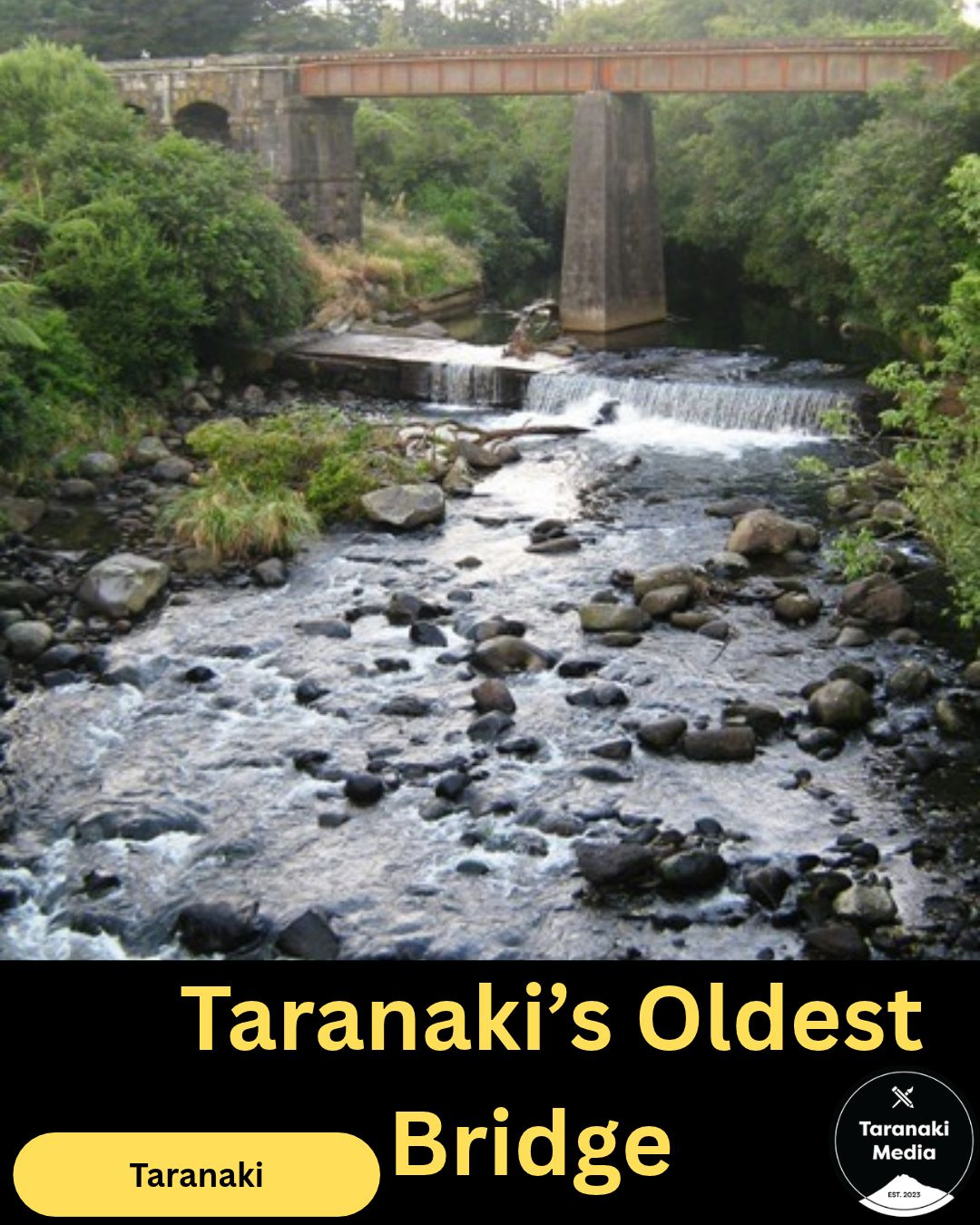
Built in 1879, this Tariki rail bridge is Taranaki's oldest surviving bridge.
Tucked away over a stream just north of Tariki sits Taranaki's oldest surviving bridge, a 147-year-old railway crossing that has outlasted bush fires, severe flooding and even a gelignite bombing.Built in 1879 as part of the Marton-New Plymouth railway line, the Waipuku Stream Bridge remains an active part of the region's rail network today.
According to Heritage New Zealand Pouhere Taonga, which classifies the structure as a Category 2 historic place, the bridge stands between the State Highway 3 (Mountain Road) and Old Mountain Road bridges. It was designed by the Public Works Department and constructed by contractors David Glendinning and Alexander MacDonald during New Zealand's peak rail construction era.
While New Plymouth's original Waiwakaiho River suspension bridge was erected decades earlier in 1842, early timber crossings across the region quickly succumbed to rot and floods. The Waipuku Stream Bridge survived largely thanks to its sturdy stonework.The bridge originally featured an 80-foot (24.4-metre) under-strutted timber truss supported by distinctive masonry piers and stone arches at either end. Although the timber truss was replaced with steel spans and a central concrete pier in 1911, those original 1879 stone abutments and arched piers remain intact.
In September 2025, the New Plymouth District Council officially added the structure to its protected heritage list under its updated District Plan. In a council statement announcing the heritage listing, the NPDC noted that the bridge is thought to be the oldest working rail bridge in the country, highlighting its dramatic survival record. "It has survived bush fires in 1886, severe flooding in 1935 and an attempt to blow it up in February 1966, when two young men from Stratford used gelignite to blast out a 60cm section of track," the council said.
During that 1966 incident, a 65-tonne railcar remarkably leaped straight across the blown-out gap without derailing. Nobody was injured, and the two culprits were later caught and jailed. Repairs to the blast damage cost an estimated £6,500 at the time. Because the bridge sits on active KiwiRail land, there is no public access onto the structure itself, though its historic stone arches can be glimpsed from the surrounding rural roads near Tariki.