The summer route
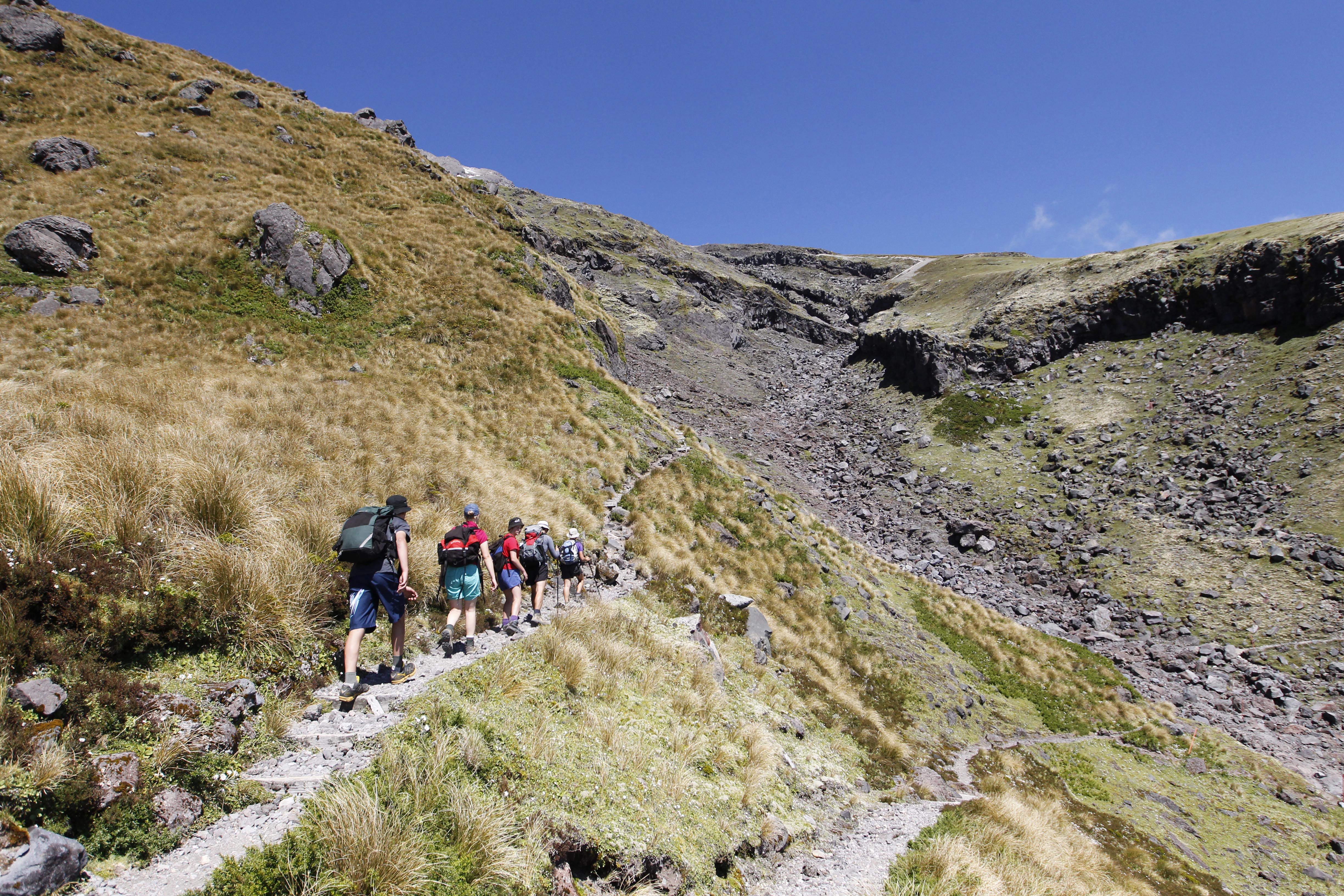
The summit climb from North Taranaki takes eight to 10 hours to complete in summer conditions. It is best to start early – it is cooler and helps to ensure you don’t run out of daylight hours. There are also great views at sunrise.
In summer the weather can still be very changeable, so be well prepared with the right gear:
- Waterproof raincoat and leggings.
- Sturdy footwear.
- Warm clothing, gloves and hat.
- Sunhat.
- First aid kit.
- Food and two to three litres of water (there is no drinking water on the route).
- Cell phone, mountain radio, and/or personal locator beacon.
- Walking poles (optional).
- Putties/gaiters (optional).
- reaching the summit is only the halfway point, allow plenty of time to descend safely before nightfall.
Note: The summit of Taranaki Maunga holds great cultural significance. Please respect this by not standing on the very highest point, or camping, eating or toileting in the summit area.
From the North Taranaki Visitor Centre (978m) the Summit Track heads up the boardwalk past the historic Camphouse and onto Translator Road (also known as ‘The Puffer’).
Approach the TV translator and Tahurangi Lodge (946m) after a tough walk of about one and a half hours to two hours, with about three to four hours still to go to the summit, sometimes longer. There is a public toilet 100m below the Lodge – this is your last toilet facility until you return later in the day. Please respect the mountain environment and remove all your own waste.
At Tahurangi Lodge you will notice you have entered the alpine zone where tussocks and mosses struggle for survival at this exposed altitude.
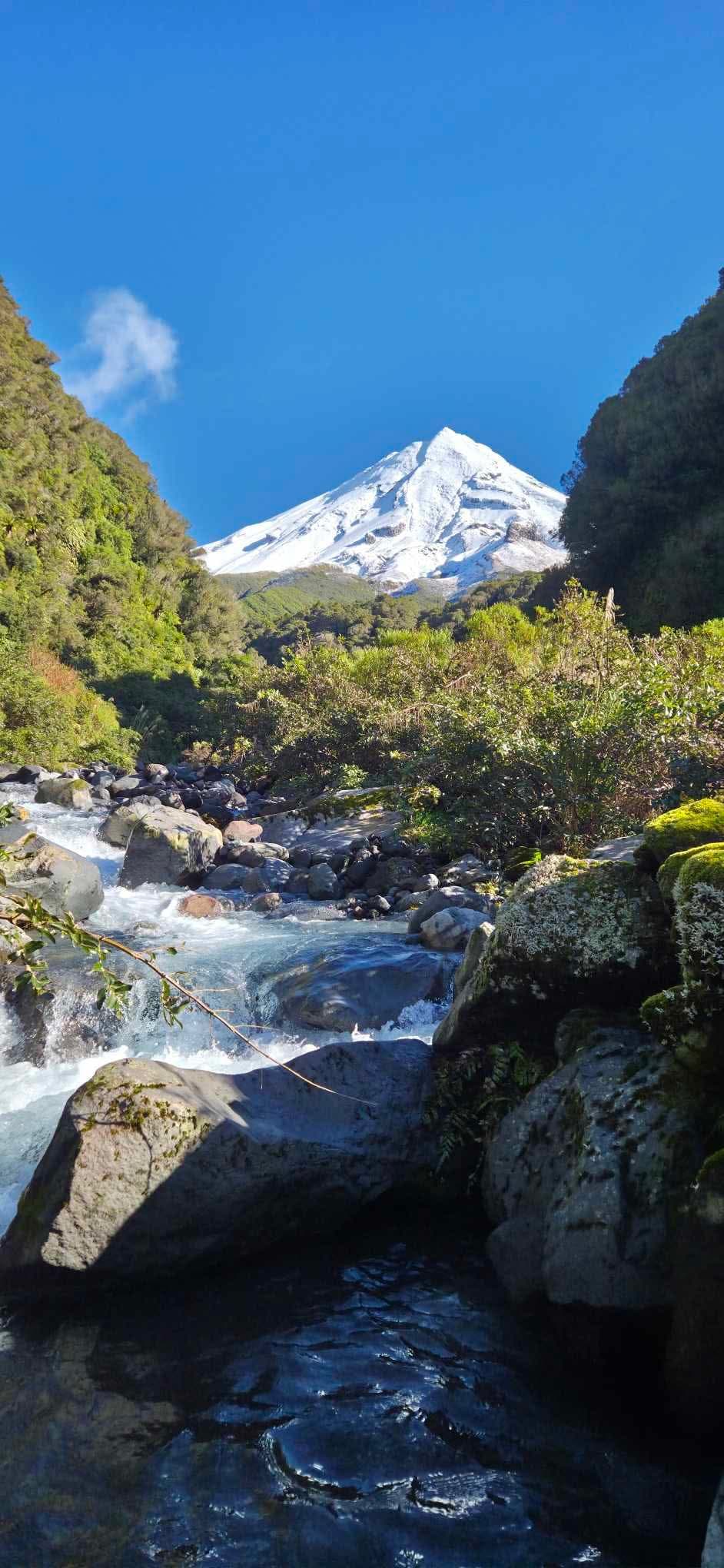
On clear days the views are expansive over the blue Tasman Sea, the lush pasture checkerboard of North and South Taranaki and the snow - capped volcanoes of the Central North Island.
Continue past Tahurangi Lodge, cross the Around the Mountain Track into Hongi’s Valley. Climb the many stairways to the scoria zigzag track on the poled route. This track takes you to a rock lava flow called the Lizard (2,314m). When the rocks emerge from the snow in the late spring, this flow begins to look like a lizard.
Take care not to dislodge rocks as you climb higher. Rocks gather speed as they bounce down the mountain and can be extremely dangerous for climbers following your path.
Climbing up the Lizard takes you to the summer entrance into the crater. This entrance is normally passable in summer but is very icy and dangerous in winter and spring, and even sometimes in early summer.
Once in the crater, which has ice in it year - round, climb the short steep slope to reach the summit rocks. Please respect the spiritual significance to Māori of this mighty ancestor by not standing on the very highest point.
From the summit area most of the mountain features are visible. Look south to Fanthams Peak (Panitahi) and out to the Kaikōura Range in the South Island. Look west over the collapsed crater rim to the Turtle, the rocky feature that from some aspects has a broad turtle - like back. Look down the eroding western slopes to the lahar
- covered farmland.
To the north you’ll look down to the Ahukawakawa Swamp nestled under the Pouākai Range and out to the extinct volcanic succession of the Kaitake Range, the Sugar Loaf Islands and Paritutu Rock at New Plymouth.
Look east, over the crater to the Shark’s Tooth, to the very top of the East Ridge. The town of Stratford sits to the east and further on are the vast lowland forests of the Matemateāonga and Waitaanga Ranges with the volcanoes of the Tongariro National Park visible on the horizon.
The descent is usually quicker (two to three hours) and a rest and afternoon tea at the North Taranaki Visitor Centre are just rewards.
Key Information & Features
Before you leave, check in with DoC, make sure that someone is aware of your plans, and set a time for your return (you can use the Adventure Smart website). You are advised not to climb alone at any time of the year.
Be prepared to turn back if weather or track conditions deteriorate or you are finding the climb too difficult. Remember
Note: The North Taranaki Visitor Centre is currently under construction. Car parking is limited until December 2026. Large trucks will be using the road, so please drive carefully and expect occasional delays. We recommend carpooling or using a shuttle if you're planning a visit.
The winter route
In most cases it is not advisable to climb to the summit during the winter and spring months.
Before you go, watch this informative video of what to expect.