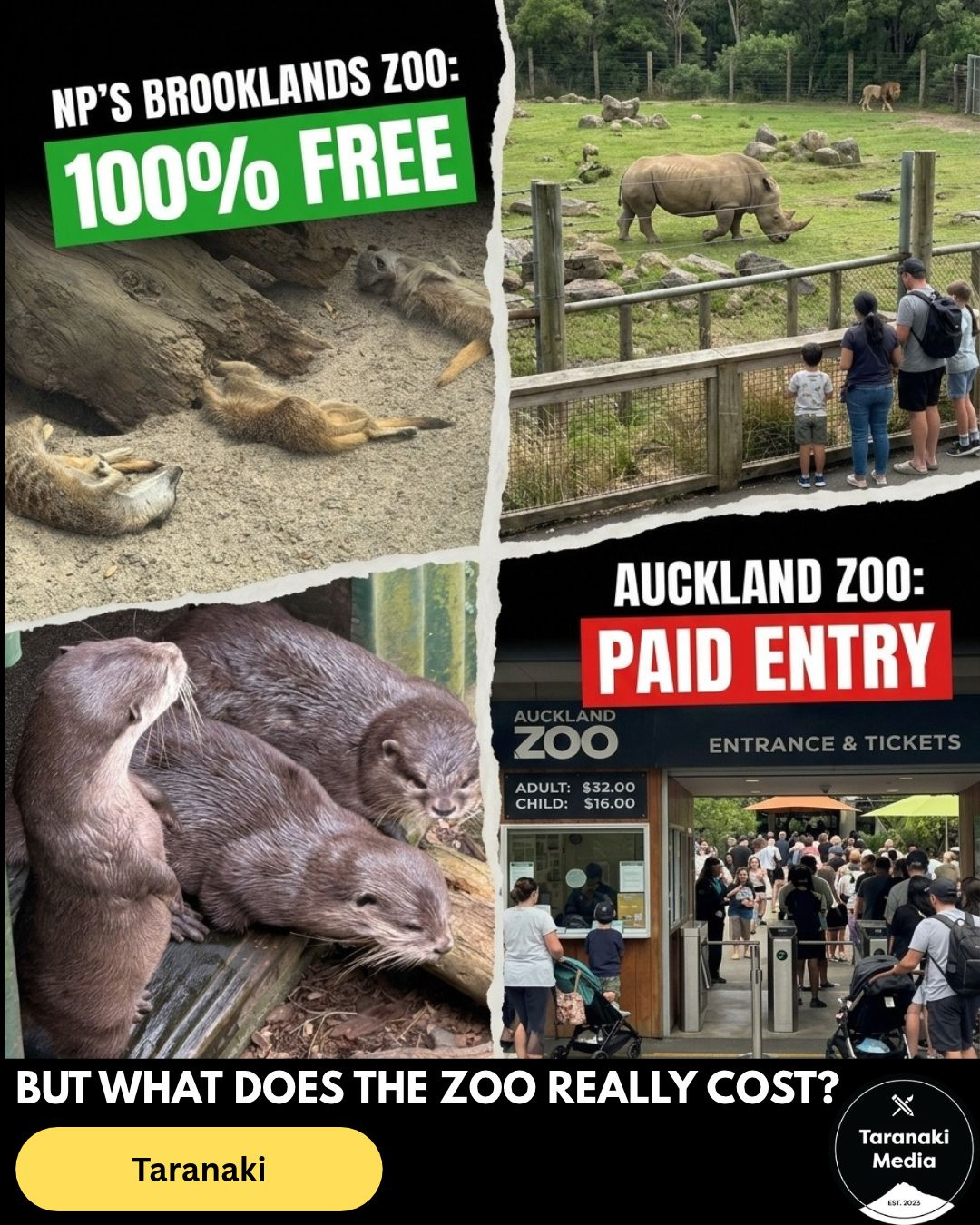

It's NZ's Only Free Zoo. But is it really free?
What makes New Plymouth’s Brooklands Zoo unique? It’s free. And it sits inside Pukekura Park. While major city zoos rely on ticket gates, timed passes, and memberships, Brooklands operates as an everyday community asset right in the heart of town.
Visitors can drive up Brooklands Park Drive or walk through Pukekura Park’s mature trees, lakes, and bush tracks, turning a quick animal visit into an easy full-day outing.
What makes Brooklands different is its grassroots character backed by formal zoological standards. Started in 1964 through local Jaycees fundraising and volunteer labour, it now runs as a New Plymouth District Council (NPDC) facility drawing more than 135,000 visits a year. Despite its compact size, it keeps the experience personal through weekend and school-holiday keeper talks and small donations that fund enrichment and animal care.
What Animals It Offers Compared With Other Zoos
Large metropolitan zoos across New Zealand hold sprawling collections with megafauna, big cats, large hoofstock, or wide native sanctuary zones. Brooklands Zoo focuses on compact, approachable, family-friendly species suited to a park setting. Its lineup includes capuchin monkeys, cotton-top tamarins, lemurs, red pandas, otters, capybaras, meerkats, tortoises, parrots, and farmyard animals like goats and sheep.
Rather than competing on sheer scale or big-predator exhibits, Brooklands offers close-up views of smaller mammals, birds, and reptiles alongside a classic farmyard where younger children can connect directly with everyday animals. Larger zoos can house bigger species across wider footprints, while Brooklands delivers easy, high-frequency viewing along a short, walkable loop right next to a playground.
What It Costs Ratepayers
Because entry is free, New Plymouth ratepayers carry the core running and capital costs through NPDC. Exact per-ratepayer annual figures sit inside broader NPDC parks, leisure, and council budgets rather than appearing as a standalone line on rates notices, though capital upgrades are set out clearly in council plans.
Under NPDC’s 2024–2034 Long-Term Plan, the council approved up to $9 million over 10 years for the first three phases of the zoo’s development vision—upgrading ageing enclosures (including otter, aviary, primate, and agouti exhibits), meeting national standards, and improving visitor facilities. Ratepayer pressure is partly eased by NPDC’s Perpetual Investment Fund, which pays out annual distributions (around $12 million in 2024–25) to help offset general rates across the district, alongside specific reserve funds.
How Other Zoos in New Zealand Are Funded
Other major New Zealand zoos rely on mixed funding models that pair council backing with earned revenue.
Auckland Zoo, run under Tātaki Auckland Unlimited, combines council support with user-pays admission, annual memberships, retail, and events—charging standard entry fees alongside discounted resident pricing for Aucklanders.
Wellington Zoo operates through a trust backed by Wellington City Council, topping up council funding with ticket sales, memberships, animal experiences, philanthropy, and grants for major habitat projects.
Brooklands remains a distinctly local, free-to-enter park zoo. Alongside separate commercial wildlife attractions in Taranaki, it gives locals and visitors a clear contrast between paid wildlife experiences and a rates-funded community zoo in the middle of the city.