
Remembering One of New Plymouth’s Grand Old Landmarks
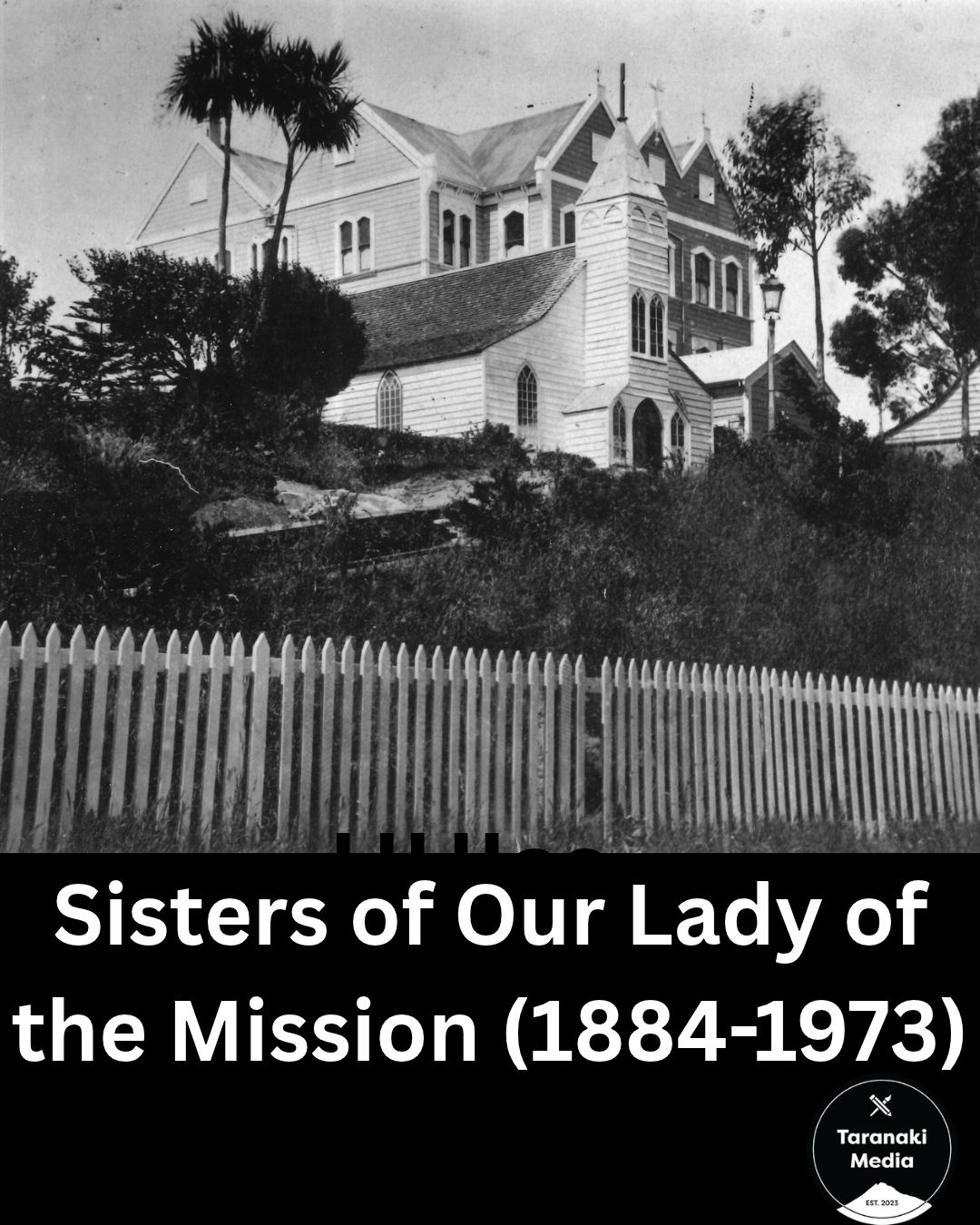
There was a time when you couldn't look across the western end of New Plymouth without noticing it. Standing proudly for almost 90 years, the magnificent old convent was one of the town's most recognisable buildings. Three storeys high, with its imposing architecture and distinctive appearance, it was a place of faith, education, discipline and countless childhood memories.
Today, it has disappeared almost without a trace. And for those who remember old New Plymouth, its loss was another reminder of how dramatically our town has changed.
The building was the Convent of the Sisters of Our Lady of the Missions, also known as the Monastery of the Presentation. Its story began in 1883 when the founder of the French religious order, the Sisters of Our Lady of the Missions, visited New Plymouth to arrange the establishment of a convent and school.
On 13 January 1884, Bishop Francis Redwood laid the foundation stone. The project cost approximately £3,000, a considerable sum in those days, raised through donations and community support.
The sisters and their pupils moved into their impressive new home on 1 September 1884.
And what a building it was!
The convent quickly became a prominent feature of the New Plymouth skyline. Its three-storey structure stood alongside St Joseph's Catholic Church in Powderham Street and was a familiar sight to generations of residents.
An education for young ladies
The convent was much more than a religious residence. It became an important centre of education for girls from New Plymouth and surrounding districts.
The sisters provided an education that went well beyond the basics. Pupils could study French, German and Italian, receive instruction in music, singing, painting and drawing, and learn needlework and the accomplishments considered important for young ladies of the Victorian era.
Interestingly, not all the pupils were Catholic. The school attracted families from different backgrounds who appreciated the quality of education being offered.
For generations of girls, the convent was part of their childhood. The sisters became familiar faces in the community, and the school grounds, classrooms and tennis courts were woven into the memories of former pupils.
In 1960, the school moved to another part of New Plymouth and became Sacred Heart Girls' College, continuing an educational tradition that had begun at the old convent.
The beginning of the end
By the early 1970s, the convent had become an increasingly familiar sight from a different era. The sisters were moving on, the school had relocated, and the enormous building was no longer required for its original purpose.
The property was eventually sold in 1973 to Shell BP Todd and the Salvation Army.
There was considerable public interest in the building's final days. An auction attracted a large crowd, with people keen to purchase a souvenir of one of New Plymouth's oldest landmarks. Everything from beds and mattresses to furniture, antiques and ordinary household fittings went under the hammer.
It was a rather poignant occasion. People were not simply buying second-hand furniture; they were taking home little pieces of New Plymouth history.
In October 1973, the demolition began.
A little piece of the convent survives
Remarkably, something remains.
The stone Grotto of Our Lady of Lourdes, built in 1907, survives near the former convent site. It is a small but important reminder of the religious community that once occupied the property.
The grotto was inspired by the famous shrine at Lourdes in France and was an important feature of the convent grounds.