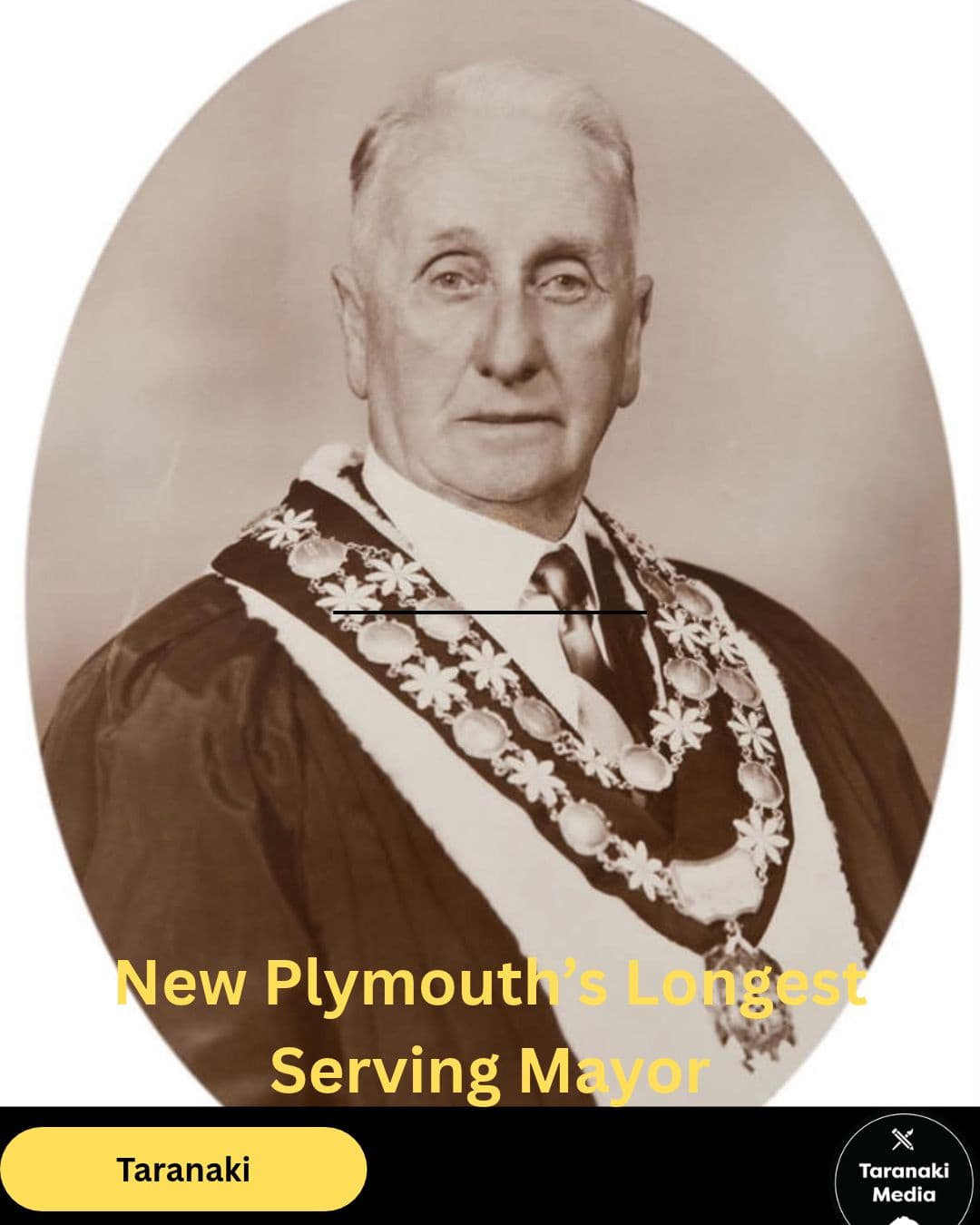

Three New Plymouth mayors whose lives ended while in office
One was killed in an early aviation disaster, another died suddenly after helping shape the city's waterfront, and a third died following a serious illness. Their stories are among the more unusual chapters in New Plymouth's civic history.
New Plymouth has a fascinating political history, but few people may realise that three of its former mayors died while still holding the town's highest elected office.
Their deaths, spanning 16 years between 1911 and 1927, shocked the community and left the borough council facing the task of finding new leadership.
One of the deaths was particularly extraordinary, involving an aeroplane crash that became only the second fatal aviation accident in New Zealand.
Gustave Tisch: A mayor remembered for his contribution to the waterfront
Gustave Gardner Tisch was elected Mayor of New Plymouth in 1908 and served until his death on 10 August 1911, aged 57.
Tisch was a well-known local businessman and community figure. Before entering the mayoralty, he had been involved in farming, hotelkeeping and several community organisations, including the hospital board.
As mayor, he took an interest in the development and appearance of New Plymouth. Among his contributions was helping establish the beginnings of what would become the city's much-loved coastal foreshore development.
His death was met with widespread sadness. The Taranaki Herald reported that his funeral attracted an extraordinary turnout, with 49 vehicles following the hearse and approximately 300 people walking behind the procession.
Businesses and offices closed during the funeral, while schoolchildren and residents lined the streets to pay their respects.
His contribution was subsequently commemorated through Tisch Avenue, along the foreshore near Kawaroa. The avenue, with its magnificent pōhutukawa trees, remains a reminder of a mayor whose interest in beautifying New Plymouth left a lasting legacy.
James Clarke: The mayor killed in a plane crash
Perhaps the most remarkable story belongs to James Clarke, who became mayor in 1919.
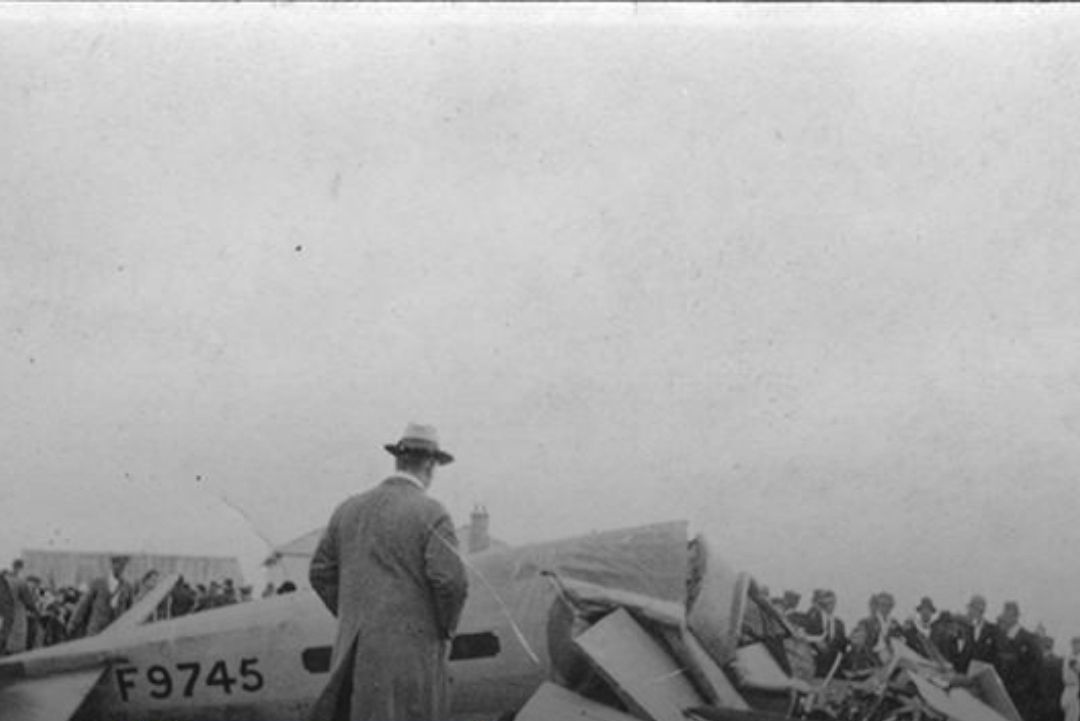
On 11 November 1920, New Plymouth was celebrating Armistice Day, marking the end of the First World War. The town was excited by the arrival of an aeroplane, an Avro 504K biplane operated by Walsh Brothers' Flying School.
It was the first aeroplane to fly into New Plymouth, and crowds had gathered at the racecourse to watch demonstrations and pay for scenic flights.
Captain Richard Russell, a decorated First World War pilot, had been entertaining spectators with aerial manoeuvres, including loops and rolls.
After completing numerous flights that day, the aircraft was preparing to leave for its next destination. Mayor James Clarke had not yet experienced a flight, so he climbed aboard with a young local woman, Kathleen Warnock, who had been selected from the crowd.
Shortly after 4pm, as the aircraft approached the racecourse to land, it banked sharply, entered a spin and plunged into a paddock.
All three occupants were killed: Captain Russell, Mayor Clarke, aged 41, and Miss Warnock, aged 24.
The tragedy devastated the town. The following days saw an outpouring of grief, with the funerals attracting large numbers of mourners.
There was another extraordinary detail. Clarke had reportedly intended to resign from the mayoralty that very evening, which was the anniversary of his election.
His death was recorded as New Zealand's second fatal aviation accident and the first aviation fatality in the North Island.
Frank Edwin Wilson: A sudden death in 1927
The third mayor to die in office was Frank Edwin Wilson, a lawyer and prominent New Plymouth citizen.
Wilson served as mayor during the 1920s, with local heritage records documenting his mayoralty from 1921 until his death in 1927.
Born in Dunedin in 1868, he came to Taranaki in 1893 and eventually established the legal partnership Roy and Wilson.
He became involved in local government, serving several periods as a borough councillor before becoming mayor.
Wilson died on 14 November 1927, aged 59. His death was believed to have been caused by cerebral meningitis.
His passing brought another change in the borough's leadership. Deputy Mayor Victor Griffiths subsequently became mayor, being elected unopposed on 6 December 1927.
Wilson is buried at Te Hēnui Cemetery. His name also lives on through Frank Wilson Terrace, a New Plymouth street named in his family's honour.
A fourth name worth remembering
There is another historical detail. James Bellringer, who was mayor from 1889 to 1893, died in 1901 while serving as deputy mayor. He was elected deputy mayor in his absence at a council meeting shortly before his death.
Although he does not qualify as a mayor who died in office, his story is another reminder of the personal sacrifices and unexpected events that have shaped New Plymouth's local government.
The deaths of Tisch, Clarke and Wilson are more than dates in a list of former mayors. They tell stories of community leadership, public service and tragedy, and provide a glimpse into a very different New Plymouth.
More than a century later, the city's streets, avenues and heritage collections continue to preserve their place in local history.