
Councils face a strict funding ultimatum if they don't ditch rigid traffic rules in favour of a risk-based approach, following new government mandates that took effect this week.
Transport Minister Chris Bishop announced that allocations from the National Land Transport Fund will now hinge on councils adopting common-sense rules to reduce the volume of road cones on local roads.
While the mandate forces sudden adjustments for many local authorities, the New Plymouth District Council has already secured government praise after participating in an early trial.
Bishop singled out New Plymouth alongside a handful of other regions, offering metaphorical chocolate fish for their proactive shift away from an outdated, 500-page Code of Practice.
New Plymouth Mayor Max Brough welcomed the formalised national shift, noting the district is already reaping financial rewards.
Brough confirmed the local council adopted the standards early. "So far we are seeing a downwards trend in our traffic management costs since commencing the new standards."
These nationwide changes target what the government describes as an expensive and inefficient culture surrounding temporary traffic management.
Bishop stated that the New Zealand Transport Agency (NZTA) managed to slash its own traffic management spending by roughly $46 million over the last financial year by assessing actual site risks instead of relying on rigid spacing rules.
Safety remains the top priority under the new system, but the government argues projects can now focus on real hazards rather than treating every suburban pothole like a major highway reconstruction.
Under the new framework, all new council contracts signed from July 1 must comply with the risk-based guidelines.
Existing infrastructure contracts have until July 1st 2027 to fully transition to the new standards to protect their share of the government's $1 billion annual roading investment.
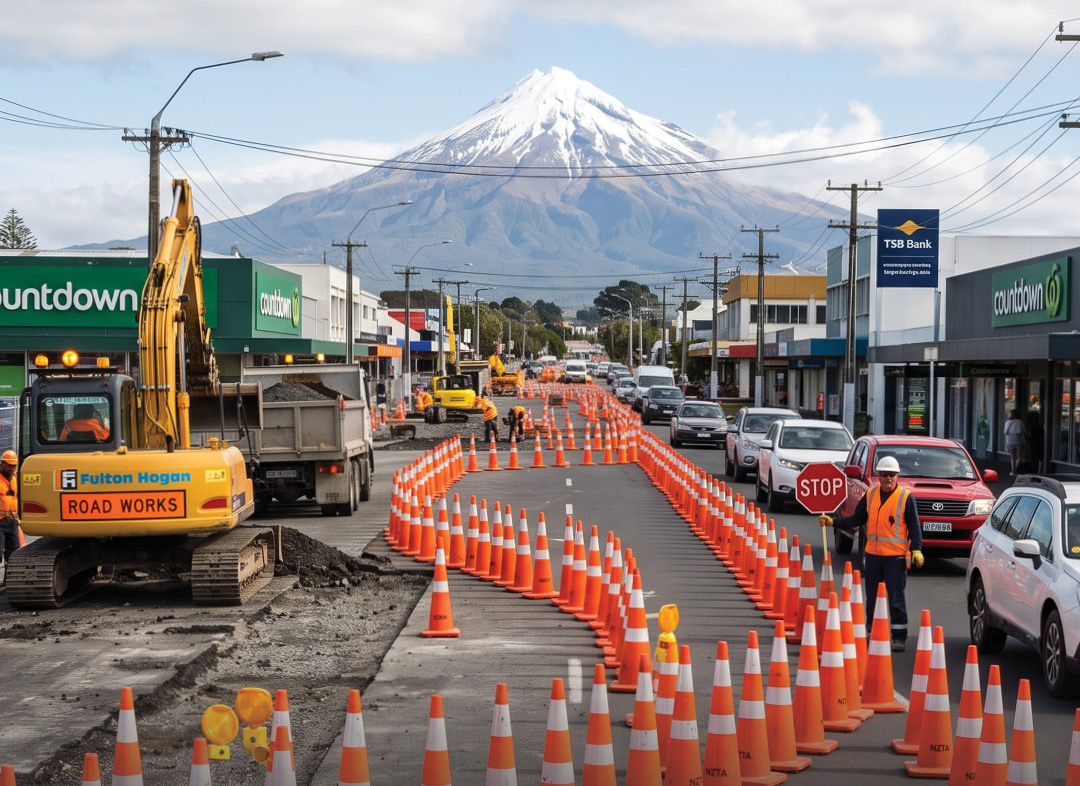
📸 AI generated image