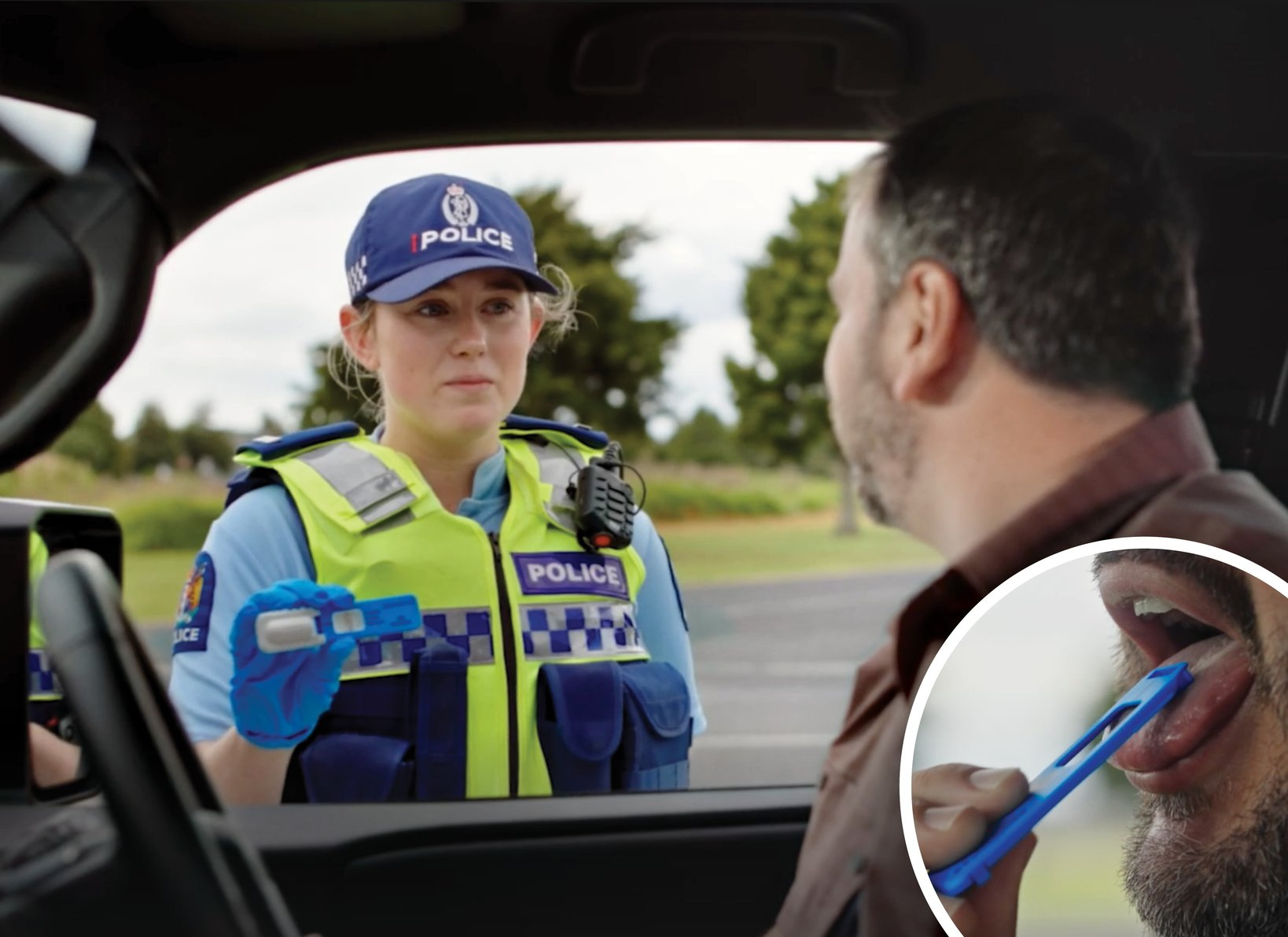

New Zealand drivers will now face random roadside drug tests, with a nationwide police operation that started rolling out from July 1.
The new safety measure allows police to stop and test drivers for recent drug use "anytime and anywhere."
These checks will operate alongside standard alcohol breath testing at checkpoints and routine traffic stops.
Inspector Peter McKennie, acting Director of Road Policing, says "The positive effect of having road policing staff throughout New Zealand who can conduct roadside drug testing cannot be understated."
Crash statistics highlight a growing problem.
During 2024, 73 fatal crashes resulted in 91 deaths where drugs were a contributing factor.
According to police data, this represented twice as many fatal crashes and three times the number of deaths compared to those caused by alcohol that same year.
Testing initially began as a pilot in December 2025.
Between the start of the trial and June 30 this year, officers conducted 4,143 screening tests nationally, returning 134 positive results for a positivity rate of 3.2%.
Roadside screening requires a tiny saliva sample, roughly the size of a water droplet, to detect the presence of substances that impair driving ability.
McKennie confirmed the test identifies recent drug use at or above a specific limit, rather than measuring exact impairment levels at the roadside.
Testing limits align with standards used in both Australia and Europe.
If a driver returns a positive result, the law requires a built-in laboratory test to confirm the presence of drugs before officers can issue an infringement notice.
Police are also reassuring the public regarding privacy and health. The testing pads are verified as biologically safe, and there are no records of harmful reactions.
"We want to emphasise that police do not collect DNA from saliva samples, nor will drivers test positive from passive or historical exposure to these drugs," McKennie said.
Much like drinking alcohol, police cannot provide a definitive timeframe for how long a person must wait before it is safe to get behind the wheel.
The time it takes for a drug to leave the system varies depending on a person's physiology, the type of substance, the dose, and the frequency of use.
NZ Police are sending a clear message; "We want everyone to get to their destinations safely," McKennie said. "Don't drive after taking anything that can impair your ability to drive safely".