
🚧👷 Latest update on the SH3 Mount Messenger Bypass Te Ara o Te Ata project below, provided by NZTA Waka Kotahi.
🚘 Bridge takes shape above the valley:
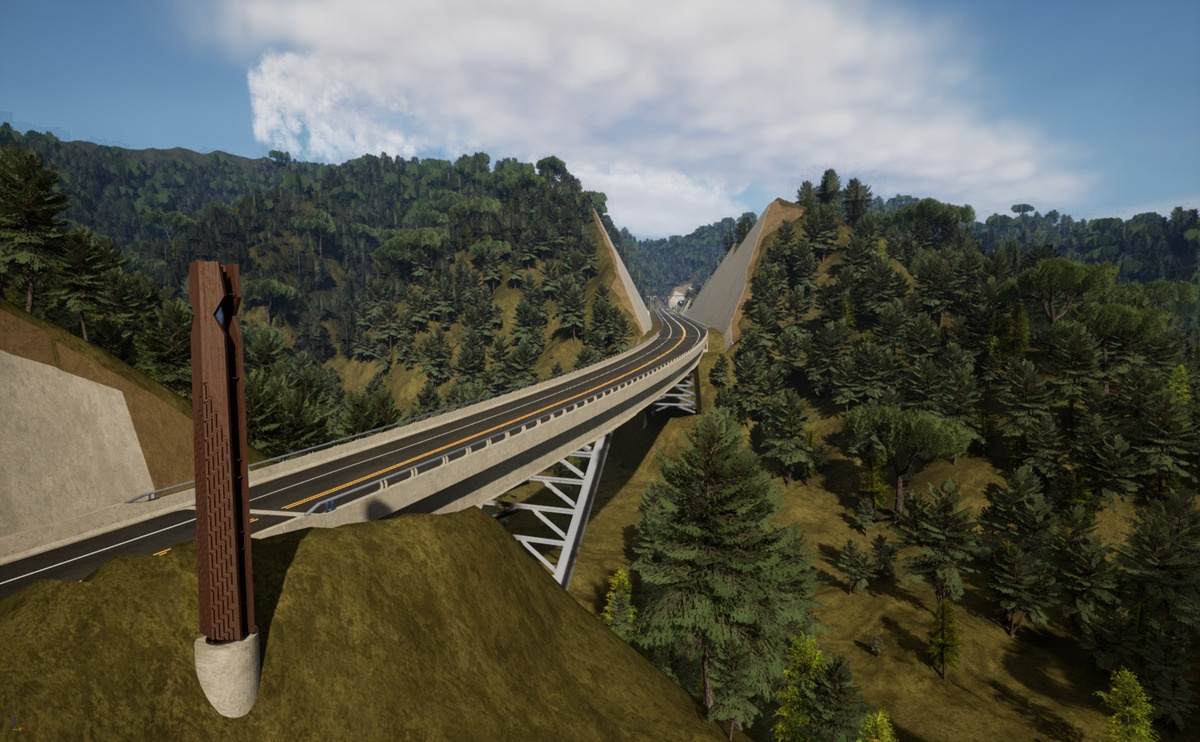
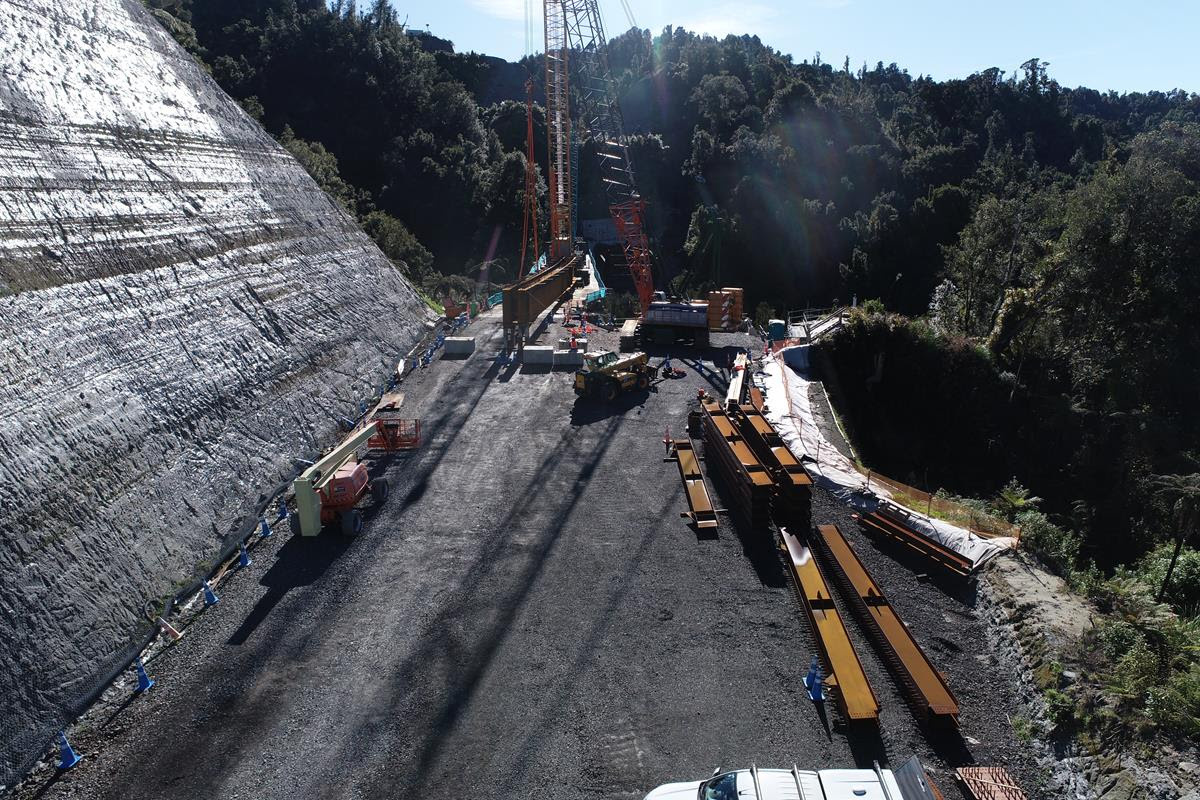
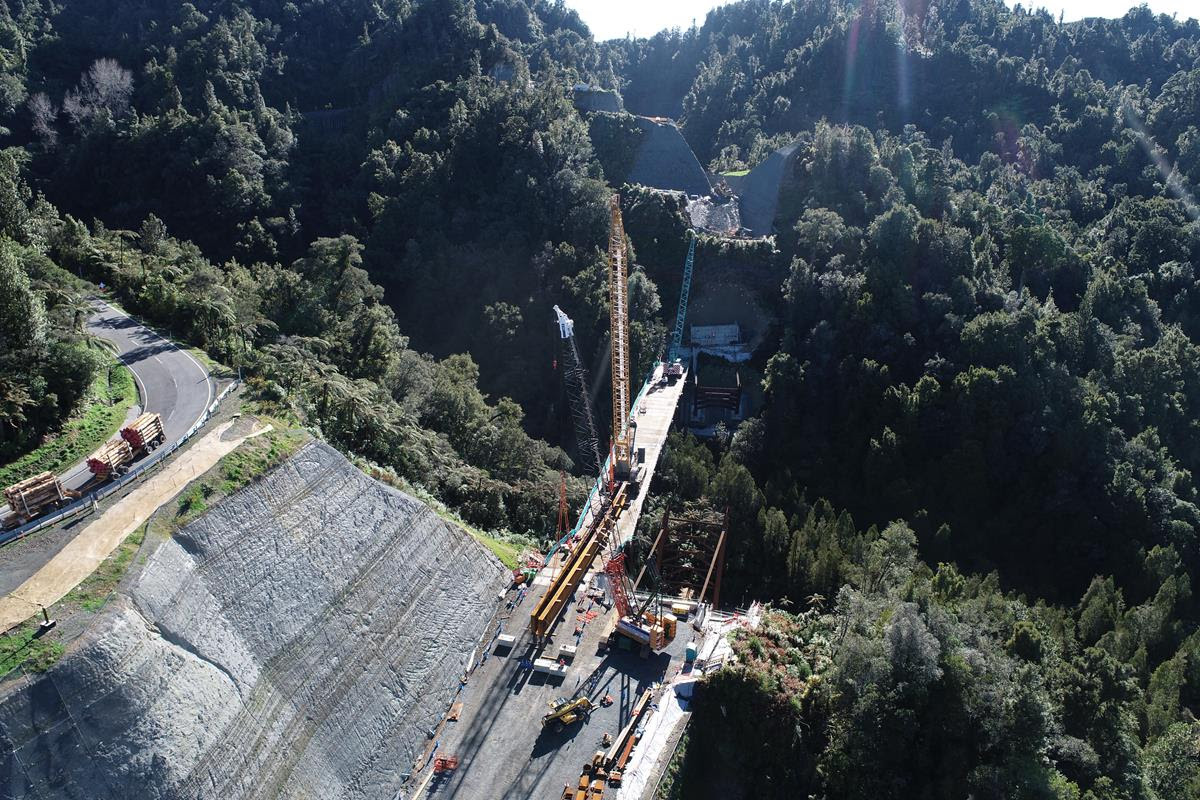
One of the most striking features of Te Ara o Te Ata - Mt Messenger Bypass is beginning to emerge, with a major milestone recently achieved on the project's 125-metre bridge in the southern section of the new alignment.
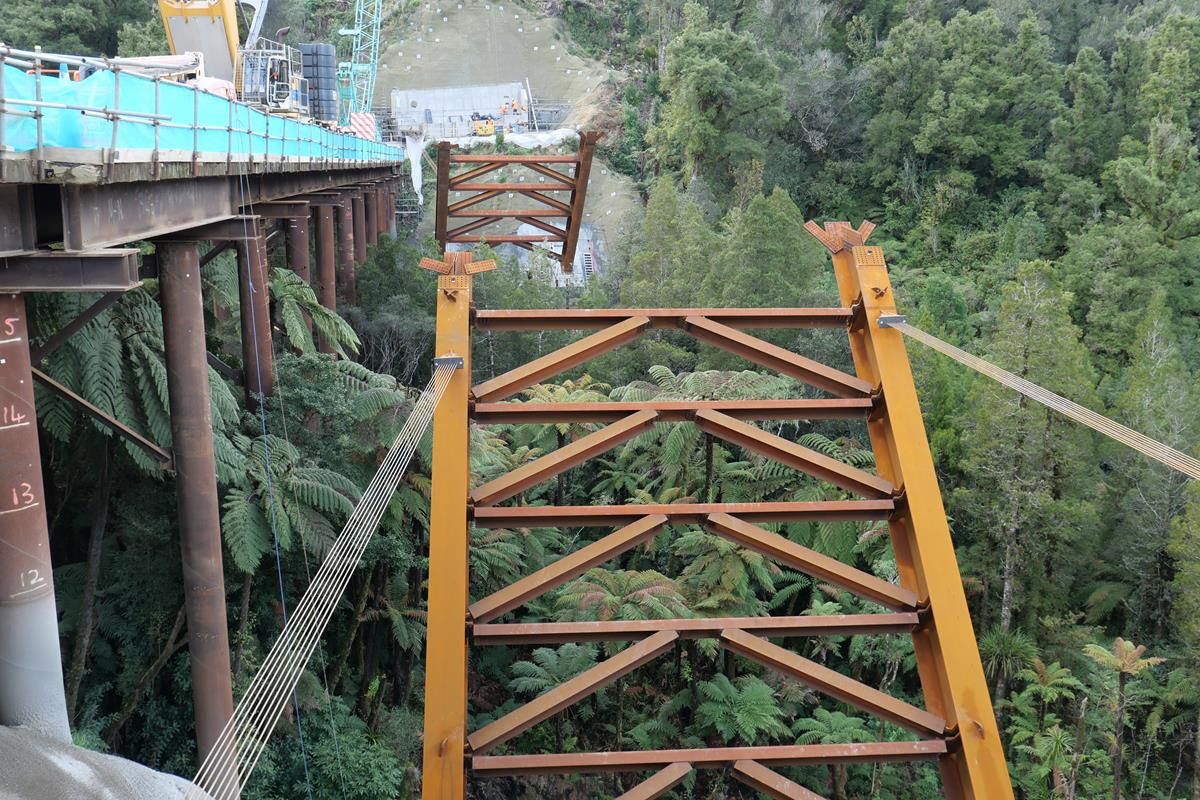
Over the past week, crews successfully lowered the bridge's distinctive angled pier legs into place, marking an important step in bringing the structure to life. Designed at a 45-degree angle, the legs allow the bridge to span an ecologically sensitive area while minimising impact on the vegetation and natural water flows below.
Construction of the bridge is being carried out from a specially built 110-metre temporary staging bridge, and involves three cranes – including one capable of lifting up to 280 tonnes.
The next phase of work will see the bridge's 10 steel girder sections lifted into place, 5 on each side of the structure, along with the installation of crossbeams and bracing. In November, the full weathering steel structure is expected to be standing, providing a clear picture of how the finished bridge will look.
Attention will then turn to building the bridge deck, with crews installing 210 precast concrete panels and 64 precast side barriers before pouring the concrete deck itself. A temporary surface will be applied to allow project traffic to use the bridge from early 2027, improving access across the site and reducing the project’s use of the existing SH3. The final road surface will be laid closer to the opening of the bypass.
As the bridge takes shape, it provides another visible sign of progress on the approximately 6km bypass, which will deliver a safer, more resilient and reliable SH3 connection through north Taranaki.
🚘 Bridge by numbers
- 470 tonnes of NZ-fabricated weathering steel
- 1,043 tonnes of concrete
-- 614t for the poured deck
-- 248t of concrete panels, each measuring 3.8m x 2m, and 11cm thick
-- 181t of side barriers, each about 4m long and 81cm high
- 61 tonnes – largest crane lift
- 51.4 metres – longest single girder section
- 8 major crane lifts
- 125 metres – length of bridge
- 24.6 metres – highest point of bridge
- 10 metres – rise in elevation from south to north
- 7% – east to west crossfall, or slant, as the bridge curves
🚘 Earthworks continue through winter
Over the past few months, we’ve been working through a winter programme centred mainly around the bridge.
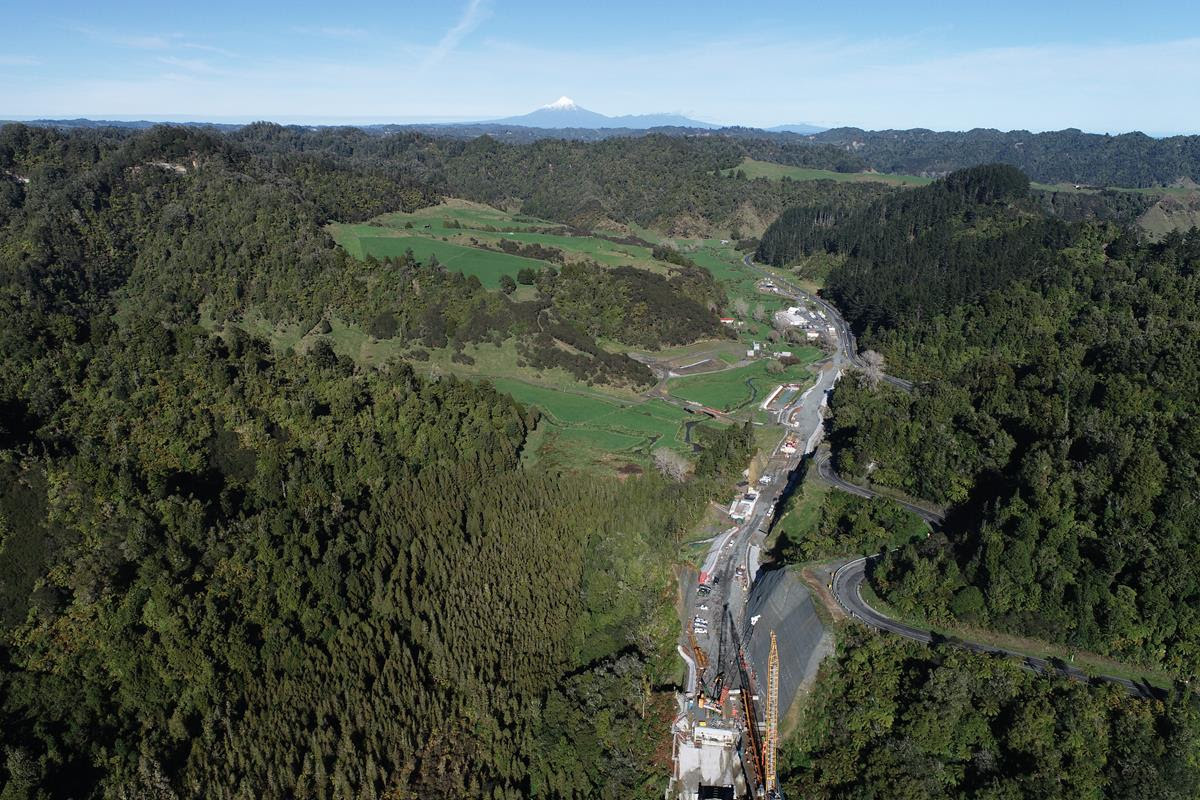
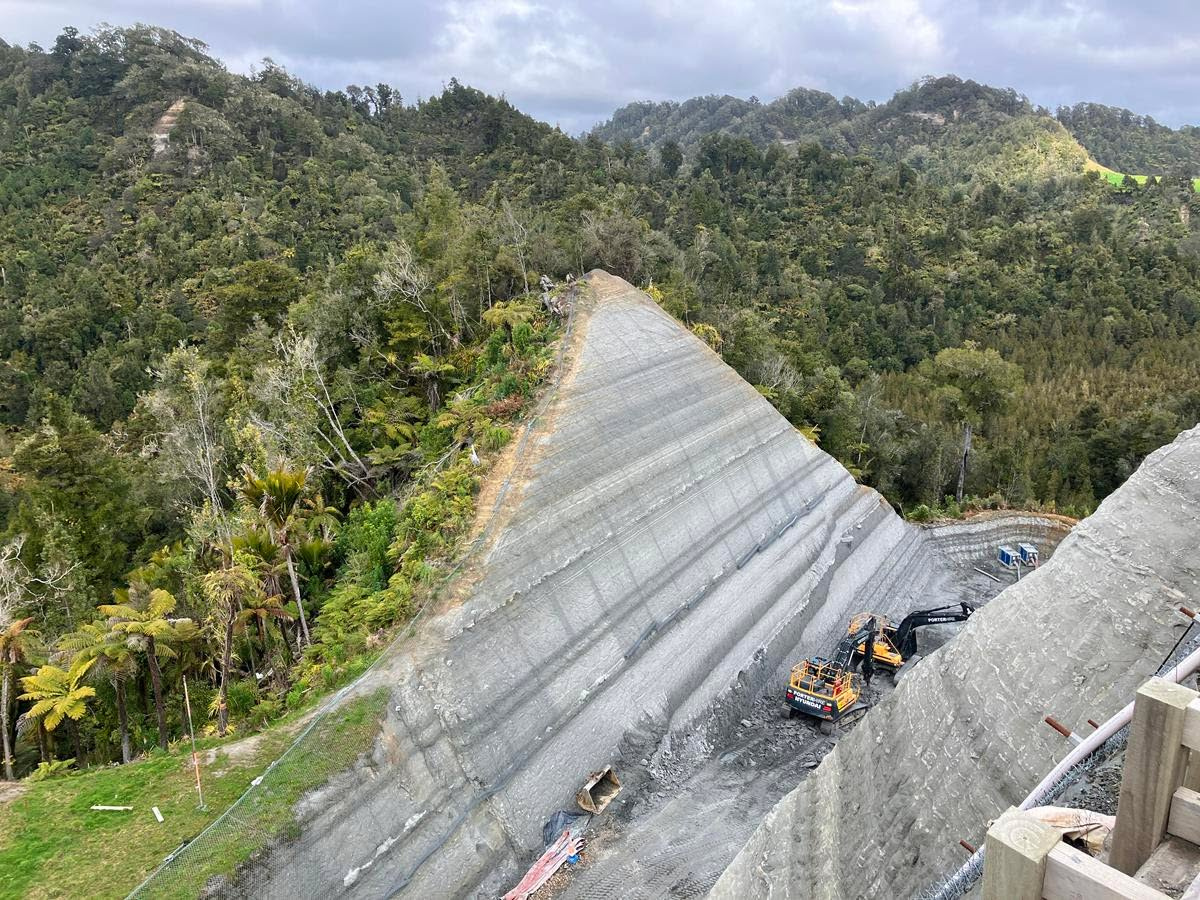
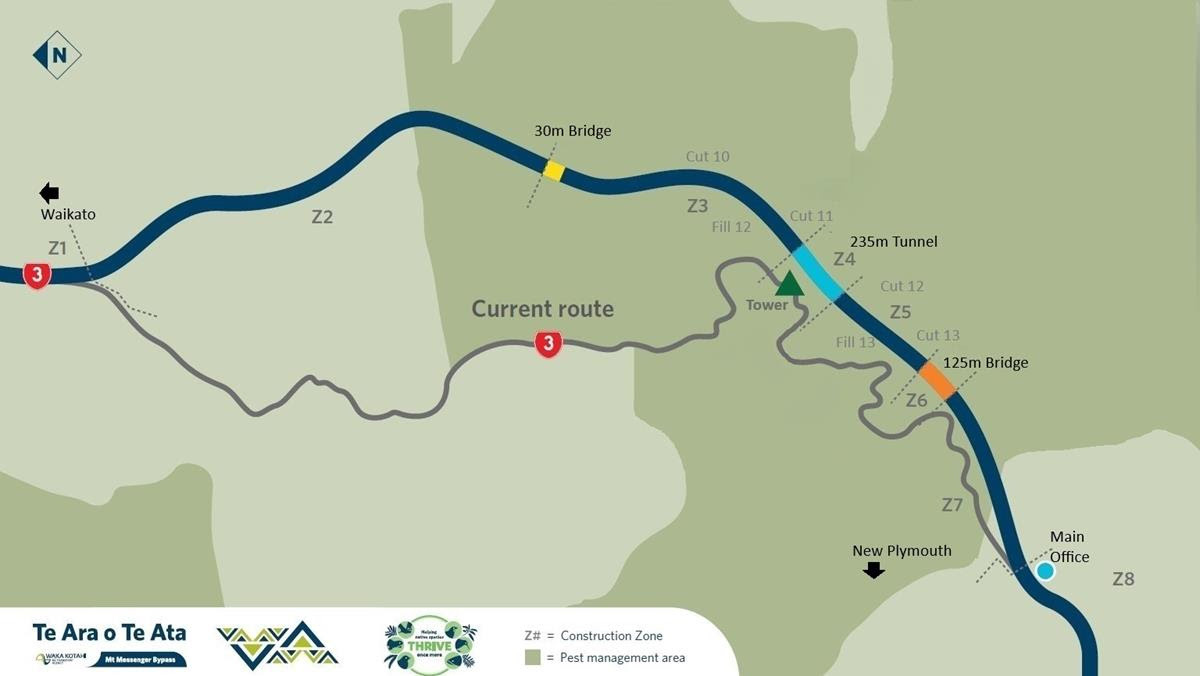
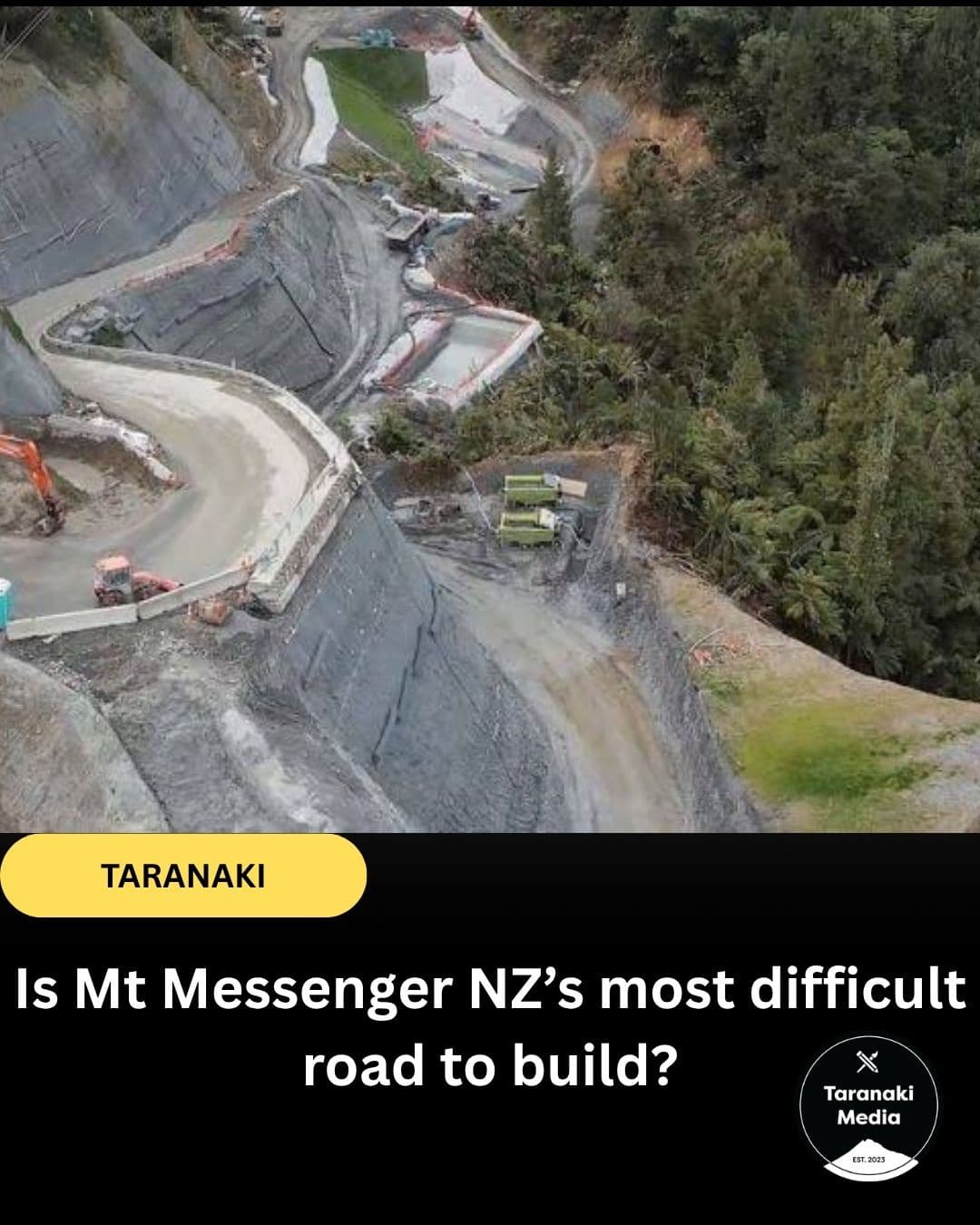
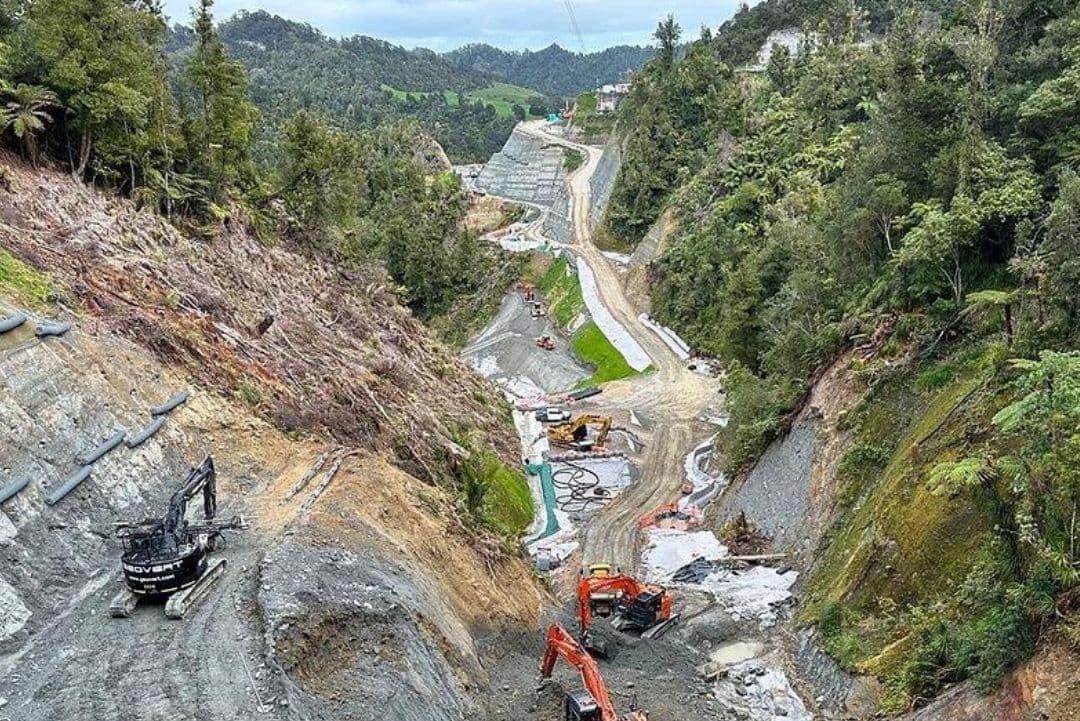
We’ve been excavating down towards the future finished height of the bridge at its northern end, on our way to removing 16,000m3 of hillside as a small part of the overall 'Cut 13', shown above and in the map below. That material is being used to build up the approaches to both sides of the project's tunnel, for which excavations and lining were completed in January this year.
Once these earthworks have reached bridge height and access over the bridge is available, in the new year, we’ll be able to drive from our main site office at the southern base of Mt Messenger right through to Zone 3, north of the tunnel (see map below). Works will then begin on removing the track that has given us access since 2022 from the existing SH3 to the tunnel's southern entrance, as it will no longer be required.
Zone 3 will be a hive of activity in the 2026-27 earthworks season, and we’re looking forward to fine weather and good progress as we push towards the site of the smaller bridge further along the zone.
This will be a big season, with the 125m bridge due for completion and 128,640m3 of earthworks targeted for excavation. We have a focused team, and they’re well set up to deliver more great progress this summer and beyond.
🚘 Koanga marks a milestone as 50th kiwi released
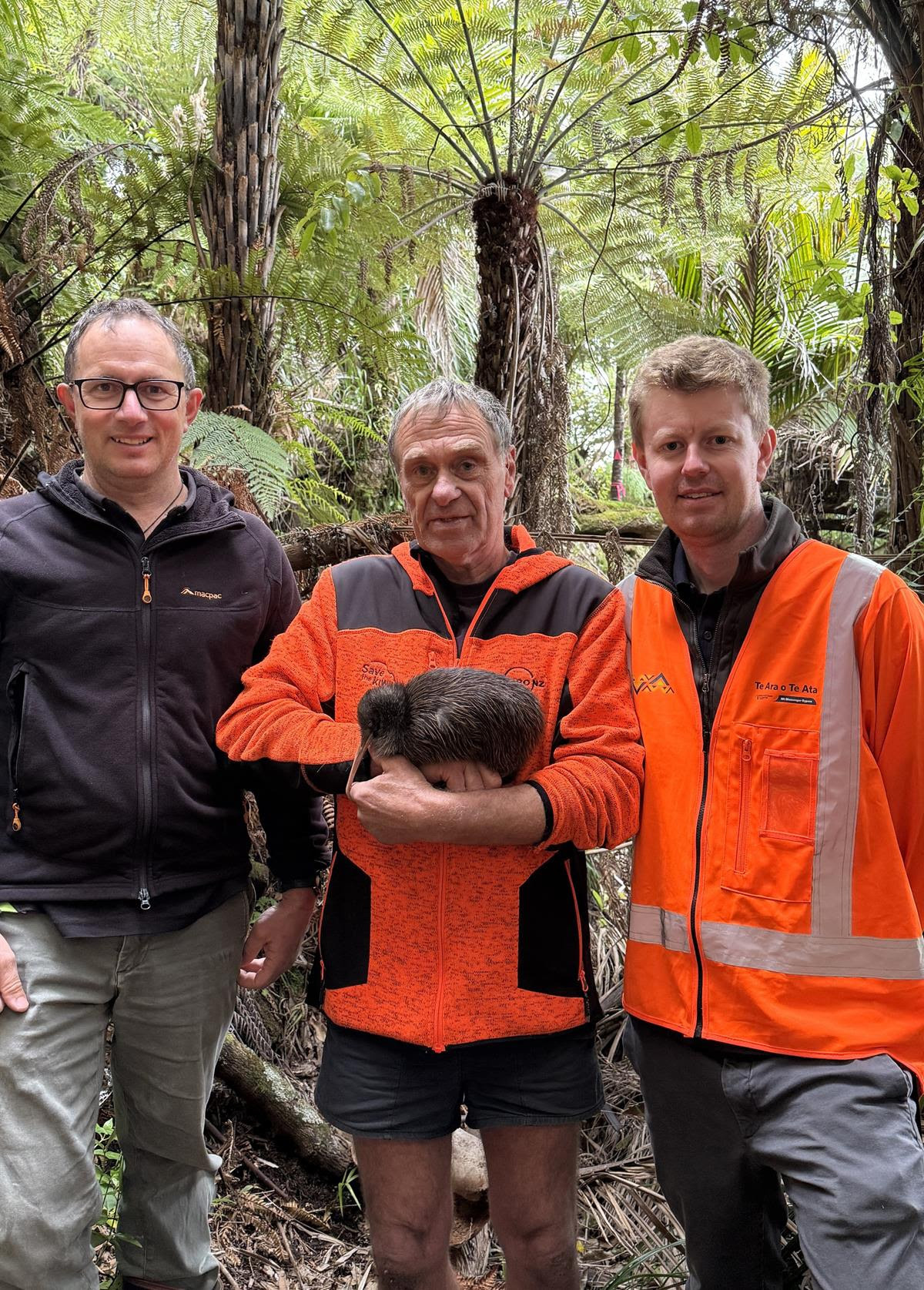
We've recently returned Koanga the kiwi to pest-controlled forest at Mt Messenger.
She’s the 50th juvenile kiwi we've returned as part of the project's environmental mitigation programme.
This programme is being delivered alongside our iwi partner Ngāti Tama, and Tiaki Te Mauri o Parininihi Trust. It helps give young kiwi the best possible chance of survival. Eggs are collected from monitored birds around the construction site, and then raised at a specialist facility near Taupō.
We return the kiwi back home to pest-controlled bush, away from construction activities, once they're at least 1kg in weight and big enough to fend off stoats.
Koanga's return represents an important milestone for the project, as we reflect on our years of collaboration, careful planning and commitment to protecting the native species that live where we're working.
As spring begins and another kiwi breeding season approaches, we're looking forward to welcoming many more kiwi back to the bush.
🚘 Aerial operation hits rats and possums hard
Our pest management work is a crucial part of the project’s environmental mitigation programme, building on years of great work by our iwi partner Ngāti Tama and Tiaki Te Mauri o Parininihi Trust.
We’re cutting a 340km track network with traps and bait stations through a pest management area (PMA) either side of the new road covering 3,650 hectares, and we're working hard to reduce the numbers of predators that endanger native species like kiwi and kōkako.
A key part of this work is a 3-yearly aerial 1080 pest control operation, with helicopters delivering pellets targeting rats and possums in inaccessible locations. Following consultation with landowners, this took place in late July this year and has delivered excellent results.
Post-operation monitoring shows that rat tracking has been massively reduced from 75% in the eastern PMA and 55% in the western PMA, to 0.5% overall (evidence of one single rat was detected ).
Even better, wax tags checked by the team over 4 days showed no signs of possums in either the eastern or western PMA, down from 54% and 10% respectively.
This is an excellent outcome that not only sets up our native birds for a much safer breeding season but also offers respite to native trees, like the swamp maire, which are at risk from pest species.
📸 Thank you to NZTA for the photos and update