
🇳🇿 NZ engineers and military personnel are gearing up to track the first crewed spacecraft to head for the Moon in more than 50 years.
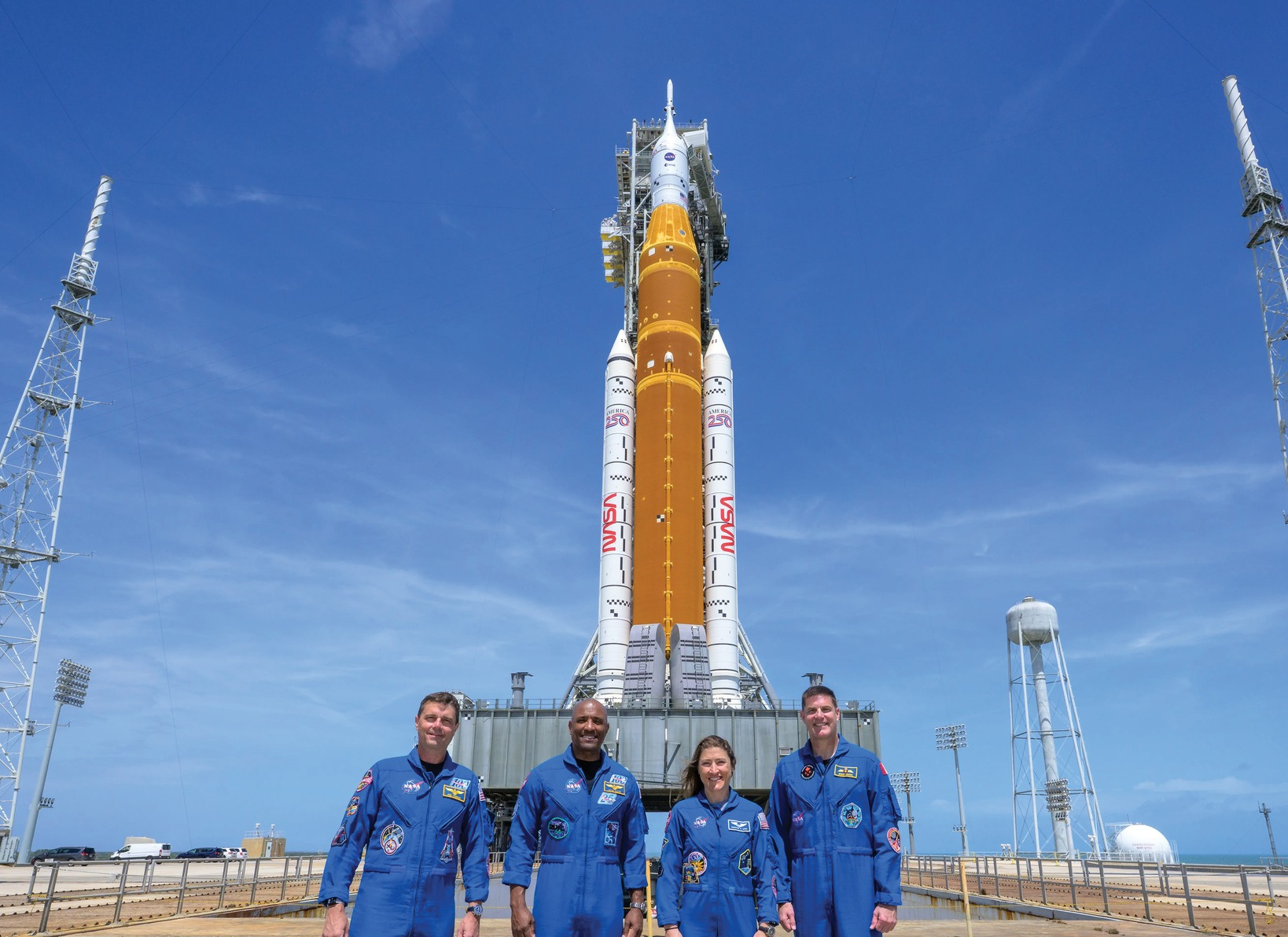
Nasa plans to launch its Artemis II mission from Florida at 11.24am NZDT today (Thursday 2 April) atop a 32-storey Space Launch System rocket, sending four astronauts further from Earth than any human has ever travelled.
This 10-day flight will see the crew travel several thousand kilometres beyond the Moon, looping around the far side of the lunar surface before returning home.
The four astronauts that make up the crew includes the first woman, the first person of colour and the first non-American to fly to the Moon.
"Everybody's pretty excited and understands the significance of this launch," Nasa senior test director Jeff Spaulding told the Associated Press.
After spending a day in orbit around Earth, the Orion capsule will propel the astronauts toward the Moon.
They will drop out of contact with ground control for about 50 minutes as they fly behind the lunar surface.
New Zealand will play a small but crucial role in monitoring that journey.
A volunteer team from Invercargill-based SpaceOps NZ is one of 34 groups worldwide assisting with the flight.
Operating from the Warkworth Space Centre, they will track the spacecraft using large aperture antennas.
Their data will go straight to the Goddard Spaceflight Centre in the United States to help Nasa engineers evaluate how the capsule is performing.
In an email, SpaceOps NZ chief executive Robin McNeill said the tracking effort serves as a precursor for future operations.
He noted that performing well would give Nasa the confidence to potentially include the Warkworth antennas in upcoming Artemis missions.
McNeill said the Artemis II flight is an analogue to the Apollo 8 mission, which orbited the Moon in December 1968 to prepare for the Apollo 11 landing the following year.
He remembers the 1968 mission well and is "doubly excited" to support this new generation of astronauts, hoping for a successful voyage to the Moon and back.In Greek mythology,
Artemis is the twin sister of Apollo.
Military personnel are also stepping up to monitor the skies.
Personnel from the Royal New Zealand Air Force’s newly reactivated 62 Squadron will use sensor equipment to observe the mission at night from the NZ Space Operations Centre at Whenuapai.
Space Minister Judith Collins said in a statement that the military support aligns with New Zealand's international commitments to human spaceflight safety.
"We're very excited about New Zealand's involvement in this mission," she said.
Across the Tasman, the Canberra Deep Space Communication Complex is tracking the flight too.
Managed by Australia's national science organisation CSIRO, the site is acting as one of three global tracking stations for the mission alongside facilities in the United States and Spain, according to ABC.
🔗 Livestream below: 👇