
OPINION: Johanna Herbert
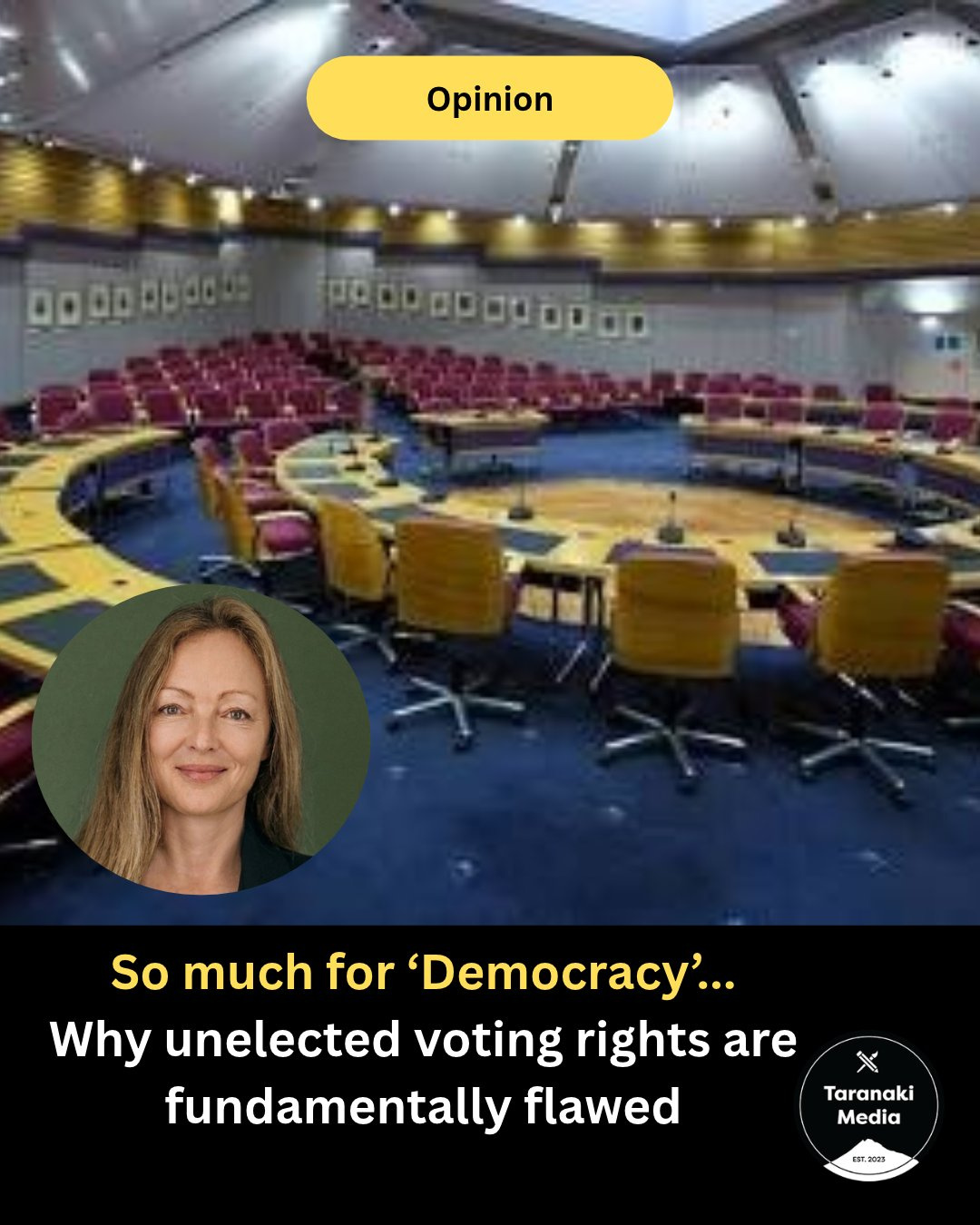
Democracy rests on a simple, non-negotiable bargain: citizens give power to representatives at the ballot box, and in return, those representatives are held accountable for the decisions they make. If a councillor makes a bad call, voters can remove them at the next election. If an unelected appointee makes a bad call, the public has no recourse at all.
That is why recent moves by local authorities to seek ministerial exemptions to keep unelected members voting on their committees are so troubling—and why the exemption clause in the Local Government (System Improvements) Amendment Act 2026 is fundamentally flawed.
When Parliament passed the amendment to restrict committee voting rights to elected members, it recognised a basic truth: public power must remain in the hands of people chosen by the public. Yet, by including a loophole allowing councils to apply for targeted exceptions, the law undermines its own foundation.
You cannot partially uphold democracy. A decision-making body is either accountable to the voters, or it is not. Allowing exceptions simply invites councils to recreate the exact democratic deficit the legislation was meant to fix.
Across the country, council majorities are using Finance, Audit and Risk committees as a shield to justify this loophole. The argument is that local councillors are not financial experts, so independent specialists need a vote to ensure good governance. This is a classic scapegoat. Using technical financial committees to push through exemptions opens the door for unelected voting rights to creep back across the board—including on committees with voting rights for iwi. Before long, the exceptions become the norm, and the public will be forced to fight for the complete repeal of unelected committee votes all over again.
To see where this logic goes wrong, we only need to look at the word council itself. The word derives from the Latin ‘concilium’, meaning a gathering or assembly called together to deliberate, from con- (together) and calare (to call). A council is not a board of hired specialists; it is an assembly of citizens called together to weigh matters on behalf of their community.
The intended duty of a councillor is clear. Voters do not elect councillors because they already know everything about accounting, engineering, or law. Voters elect them for their judgement, their values, and their common sense.
A councillor’s job is to gather enough knowledge on an issue, apply their own logic and reasoning, and make a decision. That is what they were entrusted to do.
This brings us to the proper role of experts and council officials. At the committee table, specialists should not be treated as decision-makers, nor should they be asked to steer outcomes through advice and recommendations. Their duty is strictly to inform.
Using the knowledge gained through their professional experience, experts should lay out the plain facts, explain the risks, and clarify the consequences of each option. Once the facts are on the table, the experts step back, and the elected councillors apply their reasoning and cast the votes.
When a specialist is given a vote—or worse, made the independent chairperson of a Finance, Audit and Risk Committee with voting power—the line between informing and governing is erased. An independent chair is there to ensure meetings run properly and objectively, not to decide policy or budgets.
And what happens if a committee of elected councillors finds itself deadlocked on a vote? The answer is already built into our democratic system. If a committee is hung, the deciding vote should go to the mayor. Unlike an independent chair or an appointed representative, the mayor was placed in that role by a city-wide democratic vote. The mayor carries the direct mandate of the people and should be entrusted to break the tie—and face the voters if they get it wrong.
Good governance does not require handing our democracy over to unelected appointees. It simply requires councillors to do the job they were elected to do: listen to the facts, use their own minds, and take responsibility for their votes.