
Rushed Government Funding and Rushing to Meet Deadlines
(Disclosure, the writer was a former NPDC Councillor in 2022-2025. But the information below attempts to be a factual recollection of what happened).
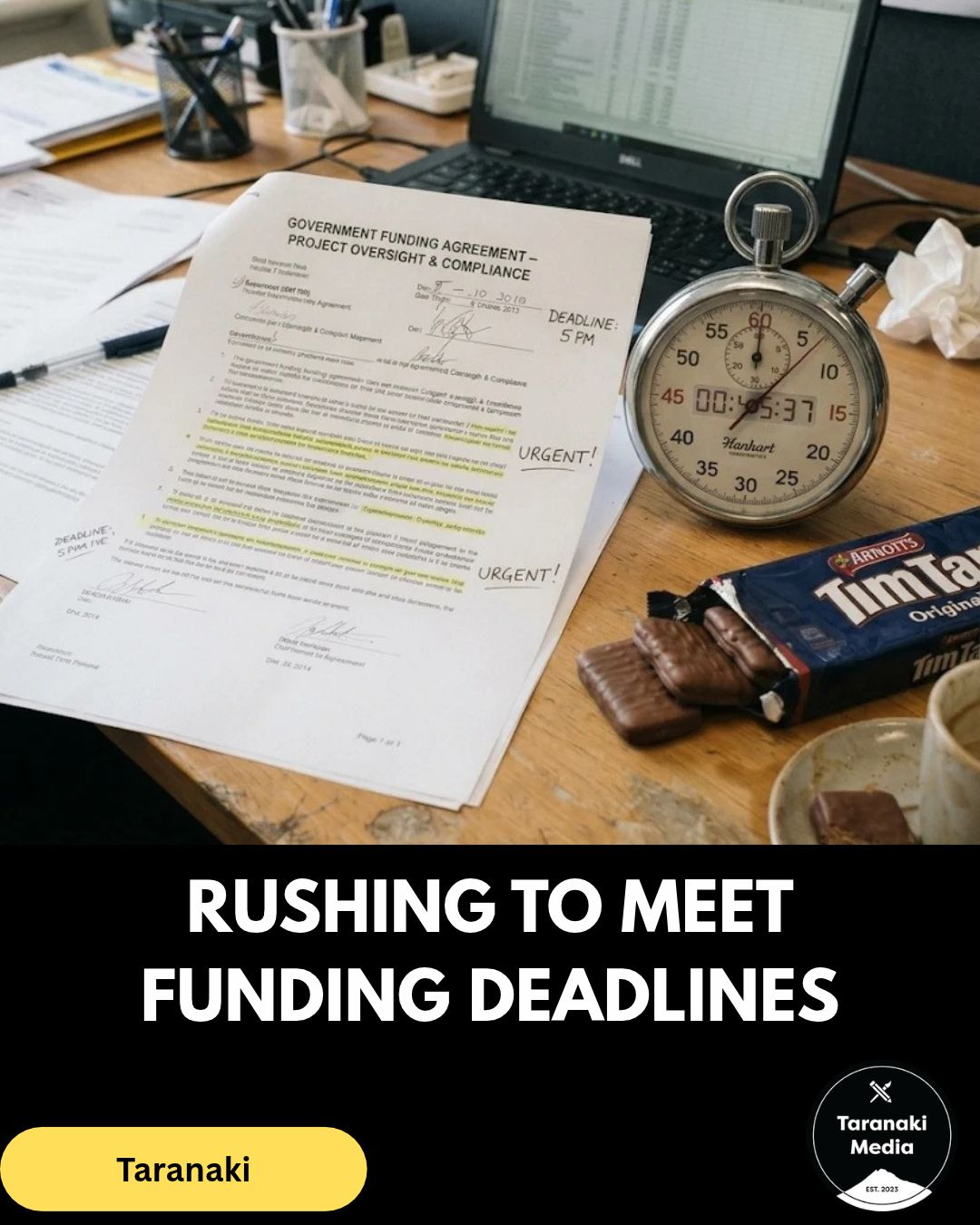
New Plymouth's controversial concrete cycleway separators may soon be disappearing, but the story behind their installation goes back to a Government funding deadline in 2023 that left the New Plymouth District Council with just 13 days to consult the public.
The tight timeframe raises an important question: did residents and businesses really have enough opportunity to influence changes that would eventually reshape some of the city's busiest roads?
At an extraordinary council meeting on Wednesday, November 18, NPDC councillors voted to remove the concrete cycle lane separators along State Highway 45, between Morley Street and Belair Avenue, this summer.
The decision follows years of complaints about the barriers, which were installed as part of a project designed to improve cycling infrastructure along Devon Street West and South Road.
Originally promoted as an upgrade that would come at no cost to local ratepayers, the project was funded through Waka Kotahi NZ Transport Agency's $350 million Transport Choices programme.
The money came from the previous Labour Government's Climate Emergency Response Fund (CERF), with councils across the country facing demanding deadlines to secure funding and deliver their projects.
To qualify, councils were required to finalise designs, undertake consultation, complete funding arrangements and deliver construction by June 30, 2024.
For NPDC, that created considerable pressure.
In August 2023, the council opened consultation under its Mā Ake – Your Way banner on proposed streetscape changes across three transport corridors: South Road and Devon Street West (SH45), Mangorei Road, and Breakwater Road and St Aubyn Street (SH44).
However, people living and working along the Surf Highway corridor had just 13 days to examine the proposals and respond.
Consultation opened on August 8 and closed at midday on August 21, 2023.
That was considerably shorter than the month-long consultation period many residents might expect for significant changes to local roads.
The pressure was not unique to New Plymouth.
A March 2023 Ministry of Transport briefing to ministers had already acknowledged the potential problem, warning that CERF-funded projects were "moving at pace" and that tight timeframes meant "there is less opportunity to engage" with local communities.
NZTA required councils to confirm project scopes before releasing construction funding, leaving limited time for lengthy consultation processes or extensive redesigns.
But while central government set the funding timetable, it was ultimately local councils that had to deal with the consequences of the decisions.
And in New Plymouth, those consequences became increasingly apparent after the concrete separators were installed.
Motorists and businesses raised concerns about lost on-street parking, narrow traffic lanes and difficult access to driveways and commercial premises.
The barriers became a familiar source of public frustration, earning the nickname "Tim Tams" and becoming one of the most debated roading projects in the district.
By late 2025, NPDC was investigating possible changes. Alternative rubber separators were subsequently trialled in early 2026, but councillors have now decided that removing the barriers altogether is the preferred option.
New Plymouth was not alone
Across New Zealand, councils were working against similar Transport Choices deadlines, with some facing difficult consultation processes and pressure to finalise designs.
Stratford District Council faced the same June 30, 2024 construction deadline for its Transport Choices walking and cycling upgrades. Residents were told designs needed to be finalised before the end of October 2023 to meet Waka Kotahi requirements.
Masterton District Council allowed just 18 days for consultation on its Lansdowne and Kuripuni cycleway proposals, between May 29 and June 16, 2023. Public opposition subsequently contributed to the addition of an oral hearing in August.
Palmerston North City Council held extraordinary meetings in August and September 2023 to progress detailed designs and funding arrangements before the relevant deadlines.
Christchurch and Hamilton also faced compressed engagement periods for cycling infrastructure and raised-crossing projects.
Meanwhile, Wellington City Council and Greater Wellington Regional Council saw some Transport Choices projects shelved after the incoming coalition government halted the programme in December 2023.
The New Plymouth experience highlights a wider problem with government-funded infrastructure programmes.
When central government attaches strict deadlines to funding, local authorities can find themselves balancing the need to secure money against the time required to properly engage with the communities affected.
The funding may have been available, but the concrete barriers were left behind for local residents, motorists and businesses to live with.
And now, after years of controversy, New Plymouth's cycle separator saga is heading towards its latest chapter: their removal.
What do you think, Taranaki?
Was 13 days enough time for residents and businesses to have their say on such significant changes to local roads? Should the council have allowed more time, even if it risked losing the government funding?
And are you pleased to see the Devon Street West separators going?
Let us know in the comments.