
Training Hub Retains Entire 2026 Medical Cohort
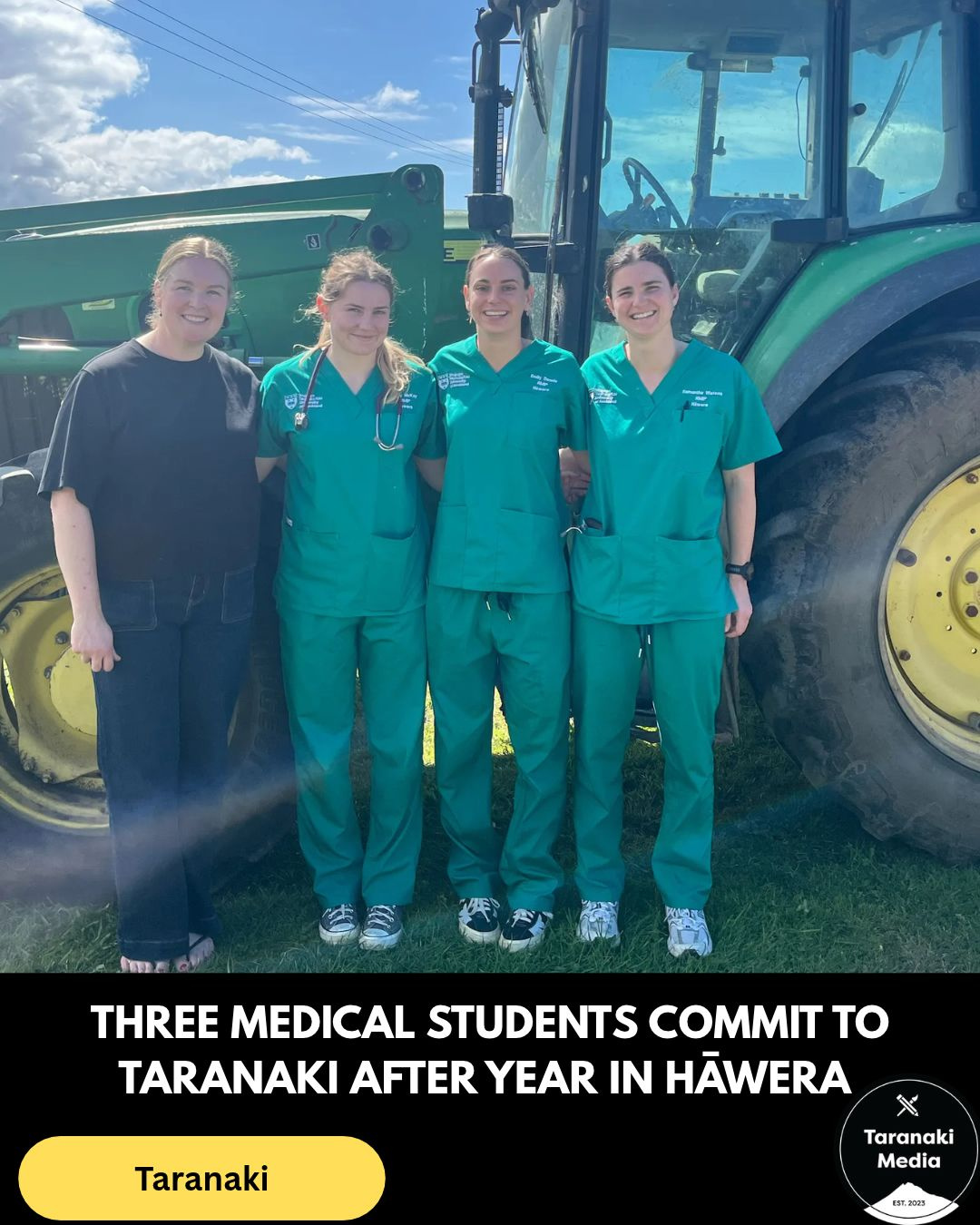
Three fifth-year University of Auckland medical students have opted to remain in Taranaki for their next year of clinical training after spending 2026 working at Hāwera Hospital.
Sam Watson, Emily Dennis and Lucy McKay completed their year-long Rural Medical Immersion Programme (RMIP) placement in South Taranaki this month. Rather than returning to larger urban centres for their final trainee intern year, all three have secured placements at Taranaki Base Hospital in New Plymouth for 2027.
Their decision provides a timely boost for provincial health services. Earlier this month, Hauora Taiwhenua Rural Health Network highlighted a 20 per cent general practitioner shortage across rural New Zealand, equating to a deficit of 151 doctors outside major cities.
Arriving in Hāwera in January, Watson, Dennis and McKay spent the year working across hospital wards, emergency care and community clinics. According to a release from the Taranaki Foundation, which helps support the students locally, the placement exposed the trio to the specific realities of provincial healthcare, including long travel distances for appointments and dairy farmers worrying about who will manage milking while they are admitted.
Dennis noted in the Taranaki Foundation release that she was struck by how adaptable hospital staff were to whatever walked through the door, adding that "no two days are ever the same". She also praised local patients for giving their time and trust so trainees could practise clinical skills.
Life outside clinical hours played a major role in keeping the cohort in the region. Community welcomes onto local marae and farms, alongside joining a hospital pub quiz team, hockey, women's squash and gym groups, helped Hāwera feel like home. Away from town, the trio also climbed Mount Taranaki and tried dam dropping.
For Watson, the experience shifted her career plans entirely. Before arriving in South Taranaki, she did not know rural medicine was a distinct specialty; asked by the Taranaki Foundation whether she would consider pursuing it now, she answered, "100%". McKay entered the year interested in rural practice and is now "almost certain" it will form part of her future, while Dennis valued the close connections built with patients.
Supervising the group was Hāwera Hospital rural hospital specialist Dr Hannah Lawn, who serves as the University of Auckland's lead academic coordinator for the Hāwera hub. Born at Hāwera Hospital and raised on a local dairy farm, Lawn trained in larger centres before returning to South Taranaki to practise.
Speaking to Farmers Weekly, Lawn said the 2026 cohort "hit the ground running" and embraced every opportunity from their first day. She added that it had been a pleasure to show them what makes provincial practice special and watch them carry that enthusiasm forward.
Launched in Hāwera in late 2024 with backing from community donors, the Toi Foundation and the Taranaki Foundation, the local RMIP hub aims to grow the region's medical workforce by training doctors inside the communities that need them most.
What do you think would help attract and keep more doctors and nurses in South and North Taranaki? Share your thoughts in the comments below.