
Aunt Daisy: Taranaki's very own queen of the kitchen
Long before celebrity chefs and cooking programmes became television favourites, one little New Zealand woman had the nation listening, laughing and reaching for their recipe books. Her name was Aunt Daisy – and she had a very special connection to Taranaki.
For generations of New Zealanders, the words "Good morning everybody, good morning everybody!" were as familiar as the sound of the morning kettle boiling.
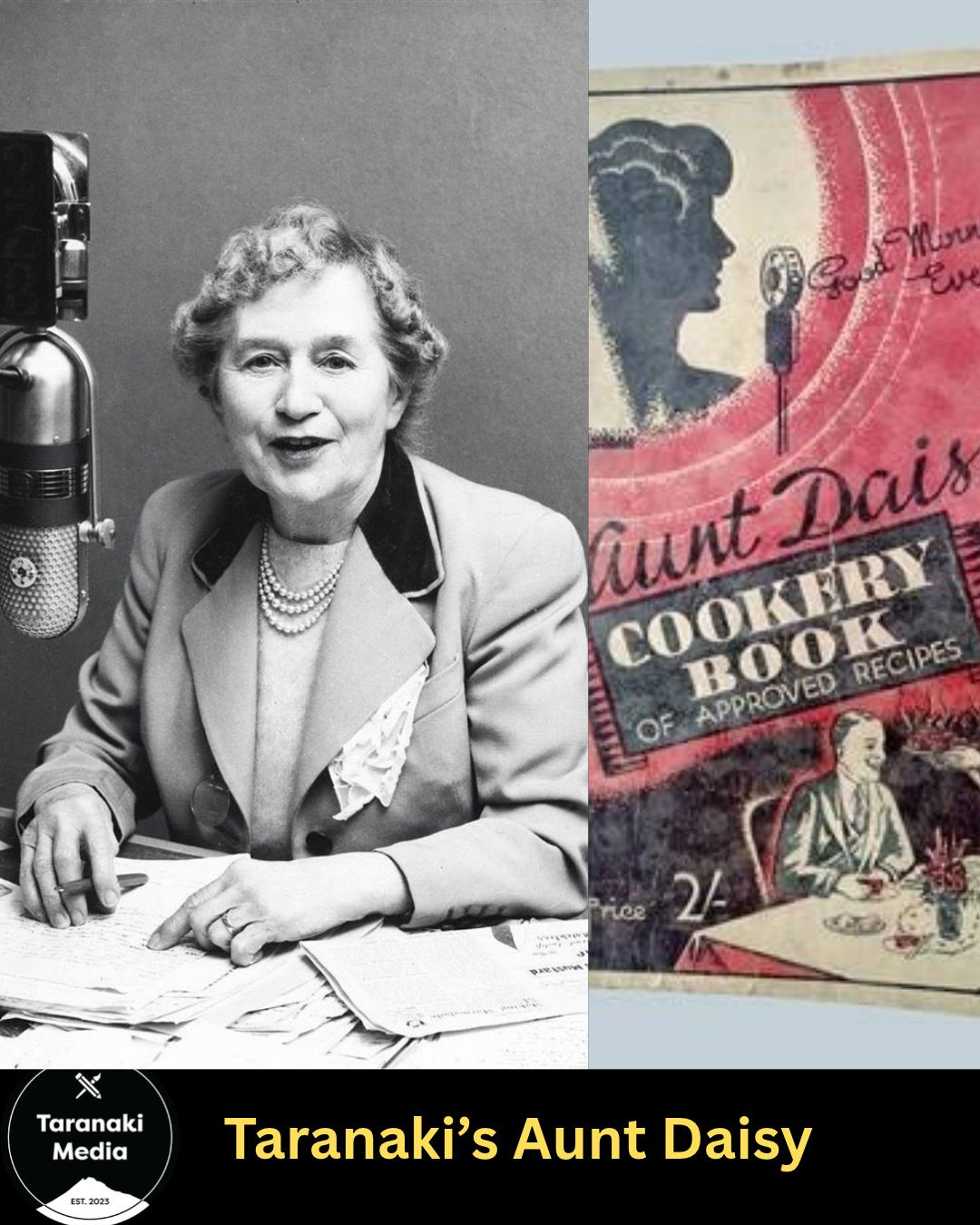
Aunt Daisy, whose real name was Maud Ruby Basham, was one of New Zealand's most beloved radio personalities. What many people may not realise is that she had strong Taranaki connections, having spent much of her childhood and early adult life in the province.
Born in London in 1879, Daisy arrived in New Zealand as a young girl with her family in 1891. They eventually settled in New Plymouth, where she attended Central School and New Plymouth High School.
She trained as a teacher, spending time at Waitara School before taking charge of a small primary school at Warea, on the Taranaki coast. She later married Frederick Basham, an engineer who worked for local councils, and the couple moved to Hawera, where they raised their three children.
So, although Aunt Daisy eventually became a household name throughout New Zealand, her story has some very familiar Taranaki beginnings.
Her broadcasting career took off in the late 1920s and early 1930s. She became famous for her cheerful personality, lightning-fast delivery and practical advice. Every weekday morning, thousands of New Zealanders tuned in to hear her recipes, household hints, gardening tips and recommendations.
She was also an extraordinarily effective advertiser. If Aunt Daisy recommended a product, it was not unusual for it to sell out that very afternoon. Importantly, she insisted on trying products herself, or having them tested, before recommending them to listeners.
Her popularity also created a publishing phenomenon. Her first cookbook appeared in 1934, and at least ten Aunt Daisy cookery books followed, along with collections of household hints and useful advice.
Why do Kiwis love their cookbooks?
There is something quite special about a New Zealand cookbook. It is rarely just a collection of recipes. It is a family history, a record of changing tastes and sometimes a treasured connection to someone who is no longer with us.
Think about the Edmonds Cookery Book, first published in 1908. Generations of New Zealanders have grown up with its recipes for scones, sponges, biscuits and cakes. Many households still have an old, well-used copy tucked away in a kitchen cupboard.
Cookbooks have also traditionally been about sharing. Recipes are passed between mothers and daughters, neighbours, friends and workmates. Some are carefully written in exercise books, while others are cut out of newspapers and magazines and glued into scrapbooks.
They remind us of birthday cakes, Christmas dinners, school fundraisers, Sunday lunches and the smell of freshly baked bread coming from Mum's kitchen.
Aunt Daisy understood this connection long before food television and social media existed. Her listeners felt they knew her personally. She was like a friendly neighbour popping in for a morning chat, except that she was talking to the entire country.
She continued broadcasting until shortly before her death in July 1963 and was awarded an MBE in 1956.
Today, her books remain collectable reminders of a different era, when a trusted voice on the radio could influence what the nation cooked, bought and ate.
And for Taranaki, there is an extra reason to celebrate Aunt Daisy. The woman who became one of New Zealand's most famous broadcasters once walked the streets of New Plymouth, attended its schools and taught children in the province.