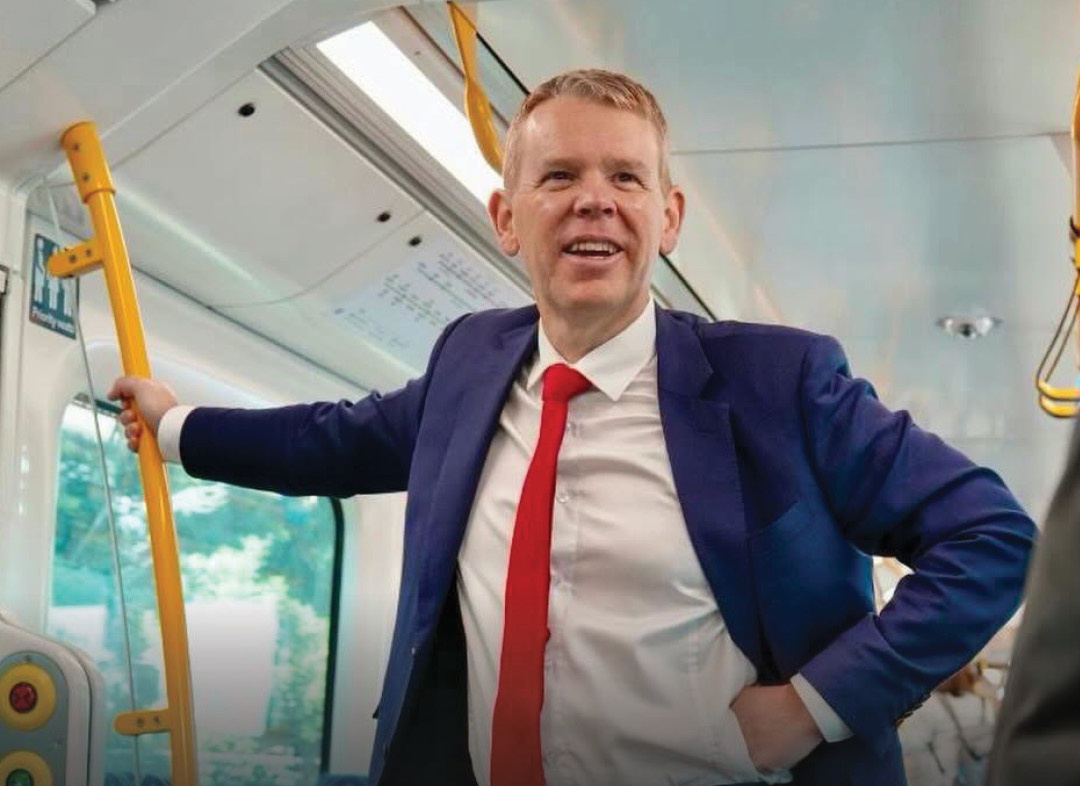

Labour has unveiled its flagship transport policy for the 2026 general election, promising to cap public transport fares at $10 a week in the regions and $20 in major centres.
Announced by Labour Leader Chris Hipkins, the policy would allow regional commuters to travel an unlimited number of times on buses once they hit the weekly threshold, with the scheme set to start in July 2027 if Labour wins power.
In a media release, Hipkins stated that the weekly fare cap was designed to put money back into the pockets of students, workers, and families. "From 1 July 2027 under a Labour Government, once a commuter has reached their fare cap, every additional trip that week is free," he said.
Labour transport spokesperson Tangi Utikere defended the $65 million annual cost, arguing that public transport should help people get ahead rather than becoming a luxury that people are priced out of.
National Party campaign manager Simeon Brown heavily criticised the move, arguing that Labour intended to drain the already oversubscribed National Land Transport Fund.
Brown said that "Labour is once again trying to bribe New Zealanders with their own money," adding that the opposition party had no clear plan to fund the scheme. The National-led coalition remains committed to its own transport agenda, which prioritises major roading infrastructure and economic growth through multi-lane highways.
Alternative solutions are being pitched from other corners of Parliament.
The Green Party argues that Labour's proposal does not go far enough. Green transport spokesperson Julie Anne Genter has reiterated her party’s push for completely fare-free urban public transport, starting with students, young people, disabled people, and low-income households.
Ms Genter has long maintained that removing financial barriers to buses and trains is vital to ending car dependency and cutting climate emissions.
Further right, the Act Party continues to oppose broad government subsidies for public transport, instead advocating for market-driven user-pays models.
Act infrastructure spokesperson Simon Court has previously supported expanding tolling systems, road user charges, and public-private partnerships to bring private sector efficiency into transport delivery.
Meanwhile, New Zealand First has focused its transport priorities on regional road access, freight reliability, and local accountability rather than subsidised fares.
Which brings us to today’s Discussion of the Day:
Should public transport be free or capped? Why or why not?