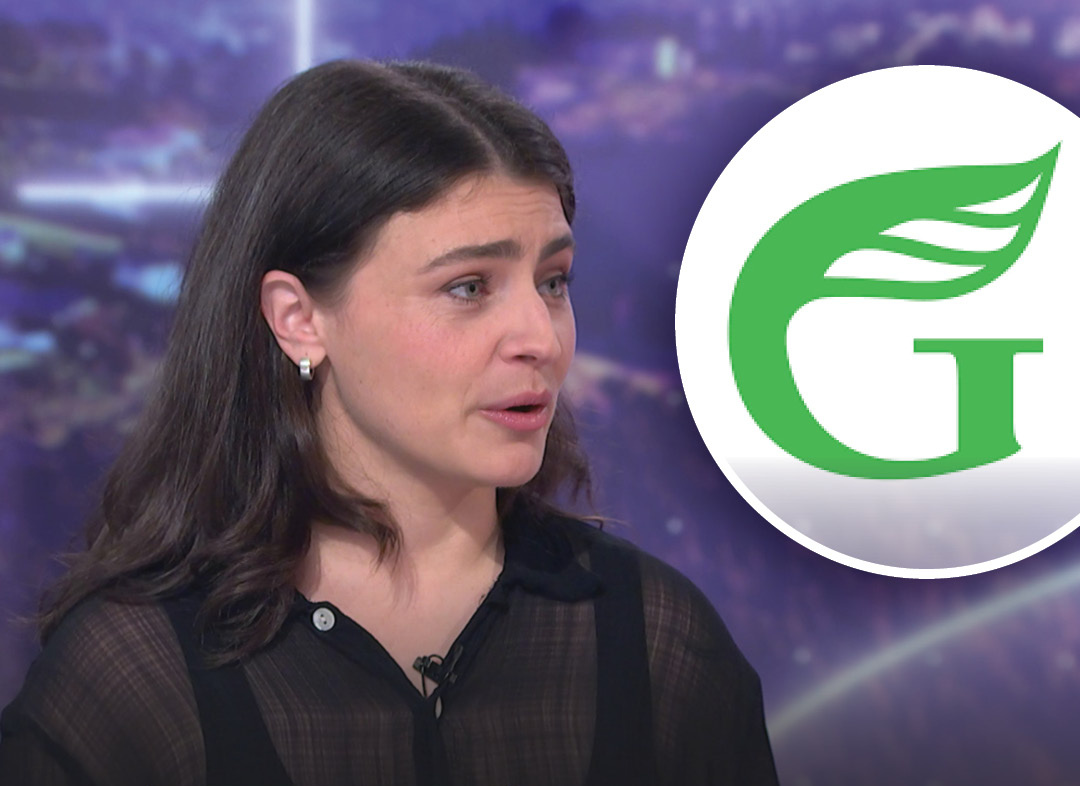

The Green Party has been forced to defend its economic credibility after correcting an $800 million accounting error in its newly released election tax policy, which co-leader Chlöe Swarbrick has dismissed as a typo.
The mistake, uncovered following media enquiries last week, involved administrative funding for Inland Revenue being added as revenue rather than subtracted as an expense. It overstated the party's projected net tax intake by $826 million over a four-year period.
Party officials re-uploaded the corrected document to their website before publicly confirming the change. Revised figures show net revenue projections for the 2027/28 financial year have dropped from $5.35 billion to $5.15 billion, while the forecast for 2030/31 fell from $5.94 billion to $5.73 billion.
Speaking on RNZ's Midday Report, Swarbrick acknowledged the error but insisted the policy's foundation remained sound. "There was a typo, which you've rightfully pointed out, with net revenue figures," she said. She attributed the mistake to a large team moving at pace and designers producing collateral under tight deadlines.
Infometrics principal economist Brad Olsen, who reviewed the costings for the Greens, apologised for missing the error during the analysis phase. Mr Olsen explained that the explicit funding for Inland Revenue's administrative work was inadvertently placed in the wrong column. Despite the mix-up, he maintained that the core revenue from the proposed tax changes still stacks up and the mistake was not material to the policy's overall taxation elements.
Dubbed a 'tax system for all of us', the package proposes significant structural changes, including a 2.5% wealth tax on net assets above $10 million and a 33% inheritance tax on gifts or estates over $1 million. This revenue is intended to fund income tax relief, creating a $10,000 tax-free threshold and a new 45% top tax rate for income over $160,000.
New Zealand Taxpayers' Union spokesman James Ross said the mistake raises serious questions about the party's ability to manage the country's finances. Ross argued that the incident highlights the need for an independent policy costings unit to verify party promises before voters head to the polls this November.
As the election campaign intensifies ahead of the November vote, this costing error has given critics fresh ammunition to question whether the minor party is ready to co-manage the country's wealth.