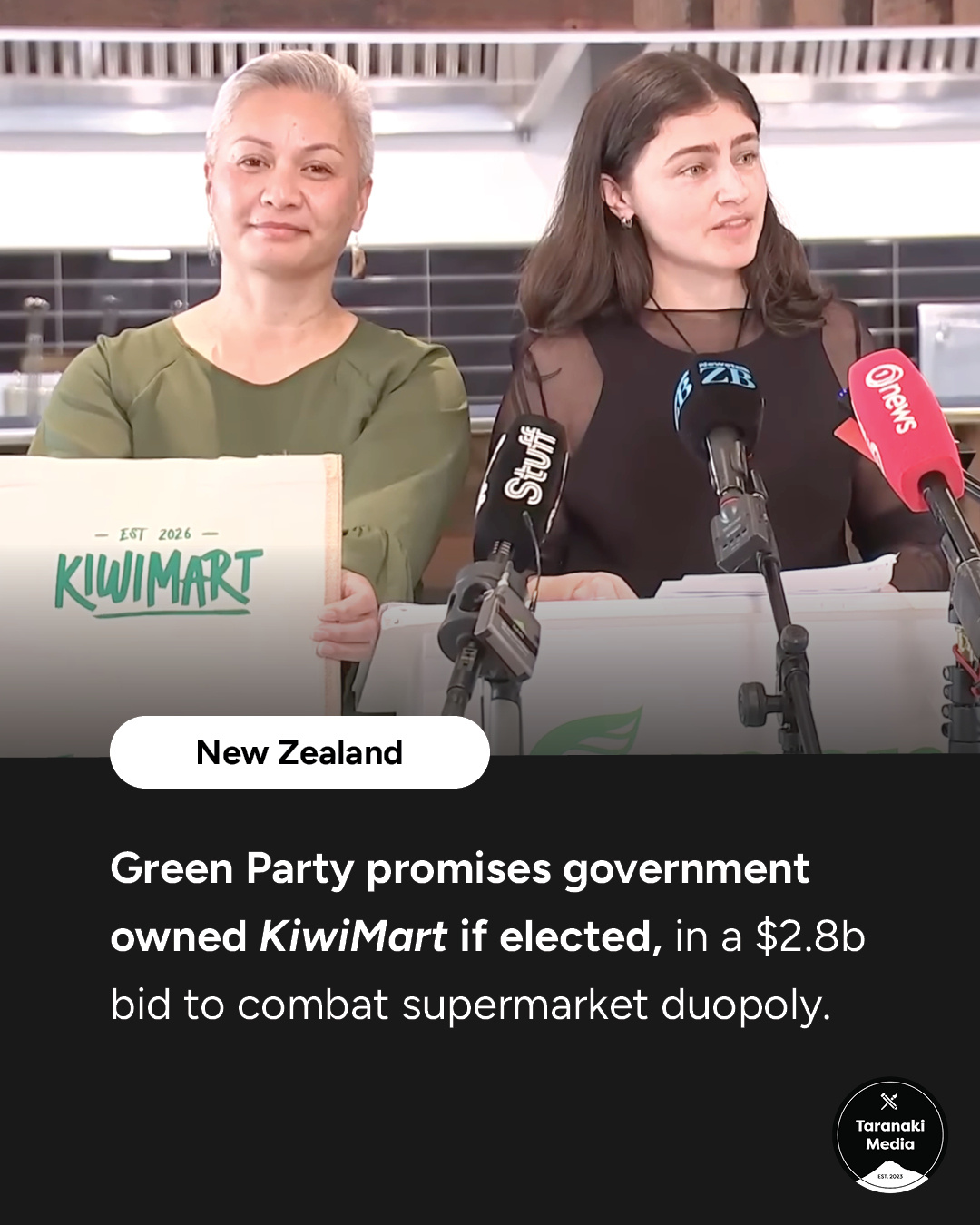

The Green Party wants to dismantle New Zealand's supermarket duopoly by forcing the sale of at least 120 existing stores to create a publicly-owned competitor named KiwiMart.
The proposal is the centrepiece of the party's new "Affordable Kai" election policy, announced on Sunday.
Under the plan, Woolworths and Foodstuffs would be required to divest 120 supermarkets and two distribution centres into public ownership.
The Greens estimate the move will cost $2.8 billion, split between $1.3 billion to acquire the assets and a further $1.5 billion to capitalise KiwiMart as a viable commercial competitor.
Green Party co-leader Chlöe Swarbrick said New Zealand produces enough food to feed 40 million people, yet it is becoming too expensive for locals.
"Two companies control what almost everyone in this country eats, and they take about a million dollars a day in excess profit out of our shopping baskets," Swarbrick said. "That is money that should be in people's pockets."
When pressed on RNZ’s Morning Report about exactly how much cheaper groceries would be under KiwiMart, Swarbrick could not provide a figure.
"Politicians are not economists," she said, stating that defining excess profits is a job for the Commerce Commission.
Critics warn that a forced breakup could have unintended consequences. Previous analysis from the Ministry of Business, Innovation and Employment (MBIE) suggested dismantling the major chains could cost up to $3.8 billion over 20 years due to a loss of economies of scale, which could push distribution costs and retail prices higher.
Despite this criticism, the party says drastic action is desperately needed.
Under the Green Party plan, the Commerce Commission would be responsible for identifying which stores should be sold based on local market share, determining a fair price without rewarding the duopoly for its dominance.
The wider Affordable Kai package includes a Member's Bill to ban price gouging at supermarkets, a rule the Greens want to extend to the energy and fuel sectors.
The Commerce Commission would also receive increased funding and powers, including the introduction of a mandatory pricing accuracy code that would automatically compensate shoppers if they are overcharged at the checkout.
Co-leader Marama Davidson said the plan heavily targets community food security. The policy promises to restore and permanently fund the Ka Ora, Ka Ako healthy school lunches programme, expanding it to an additional 150,000 children.
"One in five children in this country live in a household that runs out of food," Davidson said.
The Greens have also pledged a $150 million annual Fair Food Fund to support community initiatives like food rescue organisations, marae, and social supermarkets.
Party documents liken the proposed KiwiMart to the impact Kiwibank had on the banking sector, aiming to provide genuine competition in a market that has frustrated consumers for years.