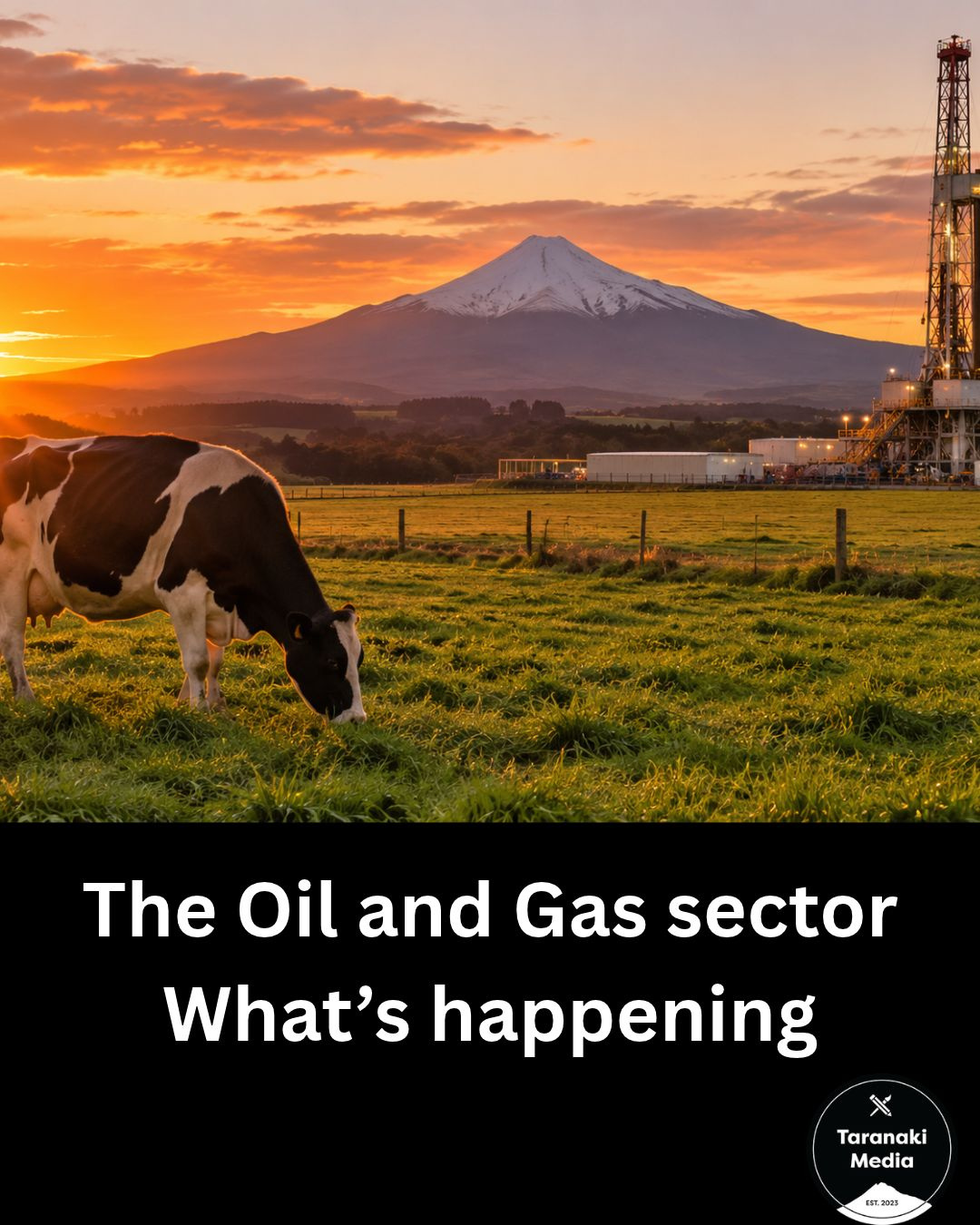

Taranaki's Oil and Gas Industry: The Big Picture
Gas production is falling, some major fields are nearing the end of their productive lives, and Methanex is preparing to shut down its remaining methanol production. The expected closure of the Māui field adds to the uncertainty.
Yet it would be premature to write off Taranaki's energy industry. Companies are returning to older wells, extending permits, investigating new fields and applying for exploration areas. One onshore prospect near Ngaere, known as Maata, is estimated to have the potential for more than 10 million barrels of oil.
So is this a sunset industry, or could another chapter be about to begin?
Why oil and gas matter to Taranaki
Taranaki's economy was worth approximately $11.28 billion in 2024. Mining contributed around 10 per cent, or $1.13 billion, although that category includes mining activity beyond oil and gas.
An ANZ regional assessment estimated Taranaki's dairy exports at about $1.8 billion in 2024, compared with approximately $610 million in oil and gas exports. Dairy is the larger export earner, but oil and gas remains a significant contributor to the region.
The industry's value extends well beyond the oil and gas sold. It includes wages, investment, contractors, infrastructure, royalties, taxes and the spending of workers in local businesses. It also supports highly skilled jobs for engineers, geologists, electricians, welders, drilling specialists, process operators, mechanics and technicians.
What do oil and gas workers earn?
One reason the industry has traditionally attracted skilled workers is its pay. Government industry information puts average earnings across New Zealand's petroleum and minerals sector at approximately $105,000 a year. Drillers commonly earn around $71,000 to $124,000, while petroleum operators typically earn around $61,000 to $108,000. Experienced specialists, engineers and senior technical staff can earn more.
The big challenge: Declining gas and Methanex
The difficulties are real. New Zealand's natural gas production fell from approximately 120 petajoules in 2024 to 102 petajoules in 2025. Falling supply has put pressure on major gas users and raised questions about the future of energy-intensive industry.
The most visible consequence is Methanex's planned shutdown. The Canadian-owned company has operated in Taranaki for more than 40 years, manufacturing methanol at Motunui, north of Waitara. Its Waitara Valley plant was mothballed in 2021, while production at Motunui has been affected by tighter gas supplies.
Methanex expects to indefinitely idle its remaining New Zealand production during the first quarter of 2027. The company has been one of the country's largest gas users and an important exporter, with its operations supporting hundreds of direct and indirect jobs.
This is a major blow for Taranaki. It is not simply the closure of a factory: it means the loss of a major industrial customer for natural gas and an important customer for Port Taranaki. Engineering, maintenance, transport and other local businesses will also feel the effects.
Methanex has said it intends to preserve the facilities rather than dismantle them. That leaves open the possibility of a restart if gas supplies and commercial conditions improve. For now, however, the planned shutdown is a stark reminder that declining gas production affects far more than the companies extracting it.
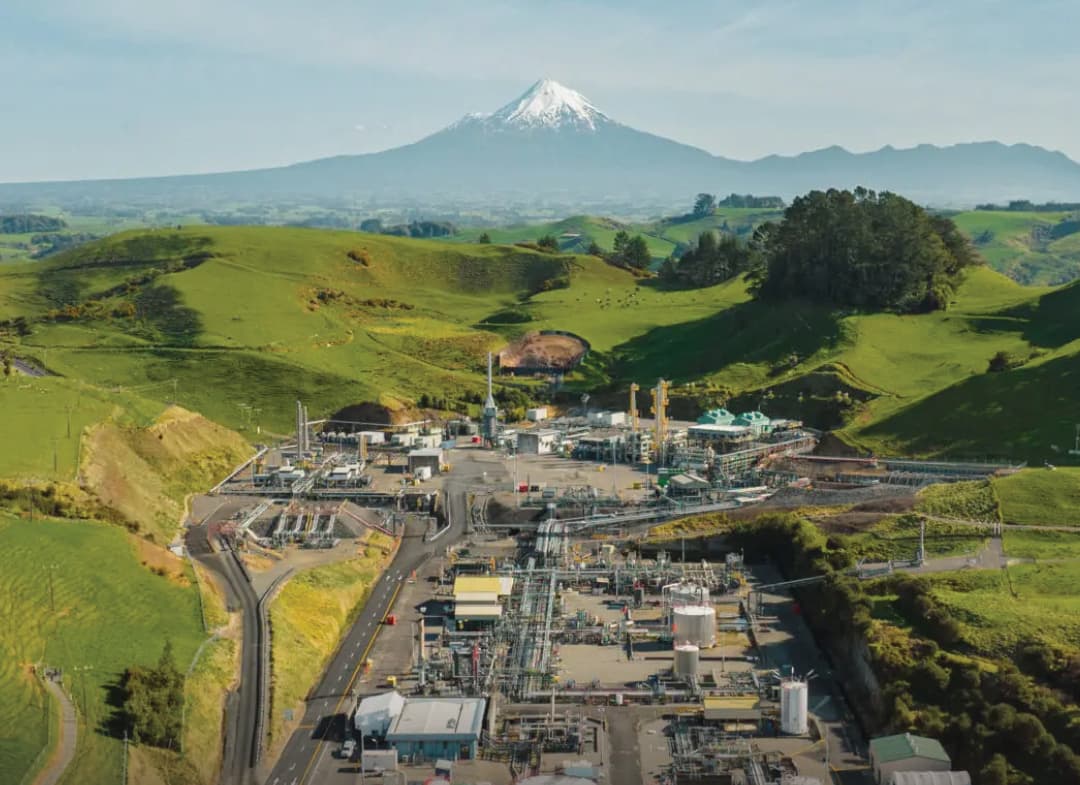
The Māui field, about 35 kilometres offshore, is another major concern. Its production is expected to cease around the end of 2026. The field has been one of New Zealand's most important energy discoveries, with gas processed at the Oaonui facility west of New Plymouth.
Is exploration returning?
There are, however, signs of renewed interest. The Government's decision to reopen offshore exploration has attracted new entrants and fresh permit applications. In July 2026, EnZed Energy received a 12-year offshore exploration permit covering approximately 546 square kilometres east of the Kupe field. It was the first new offshore petroleum exploration permit granted since the exploration ban was reversed.
Other companies are investigating offshore prospects, while established operators are seeking extensions and looking for ways to extract more from existing discoveries.
A permit does not guarantee a discovery, and a discovery does not automatically become a producing field. Exploration can take years and carries considerable risk. Even so, renewed interest is significant for a region whose economy has long been connected to energy.
The companies and their projects
Todd Energy
Todd Energy remains one of the biggest names in Taranaki. Its operations include the McKee and Mangahewa fields near Tikorangi, the Kapuni field south of New Plymouth and a 26 per cent interest in the offshore Pohokura field.
McKee is an important oil producer, while Mangahewa supplies natural gas and condensate. Kapuni has a particularly long history, having produced gas since 1969.
Todd has secured an extension to its McKee petroleum mining licence and a new mining permit for the Kāwera natural gas field. These provide opportunities to continue developing established assets and investigate additional production.
OMV
Austrian energy company OMV operates the Māui, Pohokura and Maari fields. It holds a 74 per cent interest in Pohokura, with Todd Energy holding the remaining 26 per cent. Pohokura was once responsible for around 40 per cent of New Zealand's natural gas supply.
OMV holds 69 per cent of Maari, with Horizon Oil holding 26 per cent and Cue Energy 5 per cent. Extensions to the relevant consent and mining arrangements provide the possibility of continued production into 2032–33. OMV also operates the Ōmata Tank Farm.
Beach Energy
Beach Energy operates the Kupe gas and oil field, about 30 kilometres offshore. Beach holds 50 per cent, Genesis Energy 46 per cent and Echelon Resources 4 per cent.
Gas and condensate are processed at the onshore facility near Manaia. Kupe continues to supply the domestic market. Beach reported New Zealand production of approximately 1.6 million barrels of oil equivalent in the 2025 financial year.
Sunda Energy and Matahio's assets
Sunda Energy has announced a proposed acquisition of Matahio Energy's New Zealand assets. These include the Cheal, Cheal East and Sidewinder fields, as well as the Puka permit. The transaction is subject to the necessary approvals.
The assets have been producing approximately 1,000 barrels of oil equivalent per day. Sunda sees opportunities to increase production through further drilling, restarting wells and improving recovery from existing fields. Sidewinder is also being considered for potential gas storage.
The Puka permit includes an existing discovery and the Oru exploration prospect. The wider opportunity is to give established fields another lease of life rather than always starting from scratch.
NZ Energy Corp and L&M Energy
New Zealand Energy Corp (NZEC) and L&M Energy have been involved in efforts to redevelop older Taranaki fields, including Tariki, Waihapa and Ngaere.
Testing in May 2026 reported encouraging results from the Tariki wells. Tariki-1A flowed at approximately three million cubic feet of gas per day, while Tariki-5A recorded around 1.5 million cubic feet per day. There is also investigation into the possibility of using Tariki for gas storage.
At Ngaere, work on an older well has produced encouraging oil results. NZEC and Monumental Energy are also pursuing an extension of the existing Ngaere mining licence to include the nearby Beaconsfield prospect.
Monumental Energy and the Maata prospect
One of the most closely watched onshore prospects is Maata, near Ngaere, Waihapa and existing production infrastructure.
Monumental Energy is involved in plans to explore the prospect alongside project partners including Jetex Energy and 3TCF. Jetex is the proposed operator. The prospect is associated with the Mount Messenger formation, and estimates suggest it could contain more than 10 million barrels of oil.
Drilling has been anticipated for the first quarter of 2027, subject to finalising arrangements and obtaining approvals. Maata has not yet been drilled, so the estimate is not a proven reserve or a guaranteed discovery.
Its location is an advantage. If a commercially viable discovery is made, nearby Waihapa infrastructure could make development more economical than building an entirely new production system.
Ten million barrels would be a substantial prize. At an illustrative oil price of US$100 a barrel, that volume would represent gross sales of US$1 billion. That is not profit, and it does not mean all the oil would necessarily be recovered, but it demonstrates the potential scale.
EnZed Energy
EnZed Energy received a 12-year offshore exploration permit in July 2026, covering approximately 546 square kilometres east of the Kupe field and including the Kaheru prospect.
Its initial work programme involves analysing existing seismic information and undertaking geological studies before deciding whether further exploration is justified.
EnZed has also applied for a second offshore permit covering approximately 2,400 square kilometres around the Toutouwai prospect. That application is still progressing through the process.
Sunda Energy and Pancontinental's offshore interests
Sunda Energy is pursuing an offshore exploration opportunity in the Awakino area, off northern Taranaki. Its application covers approximately 645 square kilometres and includes the historic Awakino-1 and Awakino South-1 gas discoveries.
The proposed work includes technical studies and reprocessing seismic data to determine whether the old discoveries could eventually be appraised and developed. The application is not yet a granted exploration permit.
Another significant application has come from Taranaki Energy, a subsidiary of Perth-based Pancontinental Energy. Its proposed prospecting area covers nearly 10,000 square kilometres of deepwater offshore Taranaki. The initial work programme focuses on reprocessing seismic data and identifying possible exploration targets.
Greymouth Petroleum and Taranaki Ventures
Greymouth Petroleum remains an established operator, with its Kaimiro production station near Inglewood and associated fields. Taranaki Ventures operates the Copper Moki field near Ngaere.
These smaller operators are important. Taranaki's industry is not simply a handful of large offshore platforms; it is a network of fields, processing facilities, pipelines, contractors and specialist businesses spread throughout the region.
How many people are still employed?
The industry has undoubtedly lost jobs. The Re-Energise 26 report identified more than 1,700 full-time-equivalent jobs lost between 2022 and 2025 across large energy users, oil and gas companies and their contractors. That figure should not be interpreted as 1,700 petroleum jobs alone, but it highlights the pressure on the wider energy sector. Methanex's planned shutdown will add to that pressure.
It is difficult to give an accurate current employment total for oil and gas in Taranaki because companies do not consistently publish local headcounts. However, producing fields and new exploration work continue to support engineers, geologists, electricians, welders, drilling specialists, transport operators and contractors.
What happens next?
Taranaki faces two competing realities. Gas production is declining, Māui is nearing closure and Methanex's planned departure will be a serious economic blow. The industry is unlikely to return to the scale of its heyday without substantial new discoveries and investment.
On the other hand, the region still has established infrastructure, experienced workers, producing fields and companies willing to investigate new opportunities. Redeveloping older wells may prove just as important as making entirely new discoveries. New exploration permits could eventually bring further drilling, while prospects such as Maata offer the possibility of a significant onshore find.
The oil and gas industry may never look quite the same again. But with new exploration, renewed interest in older fields and the potential for fresh discoveries, writing off Taranaki's energy future could be premature.